Monday, May 14, 2012

Kinderland Zim, pt. 1


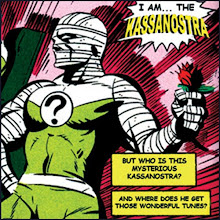
First of all, a hearty Sholem Aleichem to the multitudes of Jewish Currents readers who are here because of Nick Jarh's very flattering blog post about me. As he mentioned, I, the KassaNostra, serve as host of this modest cavalcade of musical idiosyncrasies, and all are as welcome here as a hobo on Pesach. A quick point of reference, if I may: this is a blog about music particular to Camp Kinderland and its extended mispocheh. That matters not a lick as to the accessibility of the music, but a lot of my prose tends to lean inside rather than out. At some point, I'll probably add a glossary of terms to the site (especially since I often get the feeling that no one knows what the hell I'm talking about anyway). Comments are accepted and encouraged, tho' practice would suggest nobody really believes that. Pity. 


* * *

By now, I assume all of you own, or have heard of, or are lusting after, Amnesty International's four-disc Bob Dylan tribute, Chimes of Freedom. 72 cover songs from a variety of artists ranging from Miley Cyrus to Pete Seeger, with the only real surprise being that Cyrus out-performs Seeger (and at this point, it's not all that big a surprise). Chimes is but the latest entry on a list of Dylan tribute albums -- a list so copious, the category has its own Wikipedia page. Now usually, this kind of overexposure tends to stick in the KassaNostra's craw, but really, in this case, it fits. Bob Dylan emerged on the scene fifty years ago and began confounding expectations almost immediately. Over the years he's changed his public persona enough times to make David Bowie blush. That there might be a single lens through which to view his career is an idea as obsolete as the Kingston Trio. So for once, a little gluttony isn't too bad a deal.


On the whole, Chimes mostly works, wisely steering clear of any real organizing principle in favor of an unpredictable hodgepodge of songs and artists that often sounds like they sequenced the tracks by shuffling them in iTunes. (And I mean that in a good way.) (Although I would like to know which genius programmed the Kronos Quartet immediately after Ke$ha, playing the same exact song? Pretentious gits.) But the truth is, a project like this is virtually unreviewable, too big and too diverse to be captured in a single evaluation. No individual person can possibly be expected to like every track. In that way it's emblematic of the vast ocean of Dylan covers floating around the ether: for every Hendrix version of All Along the Watchtower, or Nico's I'll Keep It with Mine, there's also, say, Sebastian Cabot's reading of Like a Rolling Stone, which I happen to think is the most pointless cover song in the history of cover songs, but which may be the bee's knees for someone else, for all I know. Anyway, there's a lot out there. Got a fave? Let me know about it.


Me, I keep trying to get my head around the Kinderland relation-ship to Dylan, assuming there even is one. Only four of his songs have been deemed slice-worthy, which at first seems painfully low, until you think about it. Dylan as an artist did not generally embrace what Ira calls "reasonable group singability," even during his earlier protest song period. Tunes like Masters of War or With God on Our Side would have to be seriously rearranged to fit into a music circle. And that doesn't even begin to address the lyrical complexity that often keeps his oeuvre out of reach of the dirty hands of us mere mortals.


But there's something else afoot here. When people talk about Dylan breaking with the folk music crowd, they're generally talking about us. Not because the wag who cried out "Judas!" at Albert Hall was Ruby Holtzman or anything, but because inasmuch as we define ourselves through our heroes, it was those heroes who, this time, ended up on the wrong side of history. And make no mistake, it was the wrong side. Even Pete Seeger has taken to revisionism, weakly insisting his infamous attempt to take an ax to Dylan's sound system at the 1965 Newport Folk Festival was out of concern for the audience hearing the lyrics through the static.


History, we are told, is written by the victors. It's worth noting, however, that in this instance, there's one very key person clearly not doing a touchdown dance in our end zone. Dylan didn't abandon the folkies so much as he abandoned everybody, which may have been his chosen trajectory all along. In his wake, an audience of self-proclaimed acolytes has codified that moment as the Great Schism of '65, and made sure to let everyone know they stand with Bob on the right side of history. Which, fair enough, may be the case. But make no mistake: Dylan sure as hell didn't invite them along for the ride, and that makes them and their proclamations, in the grand scheme of things, the equivalent of whale lice. In the story of Bob Dylan, American legend, no one gets a free pass. And all the puritans have rightly been named as such. But in an epic as long and meandering as this one, with whole swathes that we admittedly will never fully understand, the character who reaches for the hatchet, right or wrong, is always more credible than the one who straps on the kneepads. And that makes the story ripe for a little reexamination.


We'll explore the Dylan-Tolland connection down the road aways, but for now, lesstalkmoremusic! Because, of course, all of this a flimsy excuse to post a lot of awesome Dylan cover tunes. None from Chimes, tho' -- those are still a little new to have made a lasting impact (even Miley Cyrus). I figure we'll give each of the four slice songs their own post, plus some bonus stuff, because lord knows there's so damn much of it. And thank goodness for that.


1. Blowin' in the Wind


Let's not split hairs: it's a sappy song. It lacks the acrimony, conviction or humor that makes the rest of The Freewheelin' Bob Dylan such a dynamite album. It combines the self-righteousness of a protest song with the emptiness of a feel-good pop anthem. Dylan himself says it took him ten minutes to write, and it sounds it, swiping the melody of the spiritual No More Auction Block, a song possessed of the kind of courage that Blowin' in the Wind can only dream about.


But... to call its 1963 release earth-shattering would be to undersell the moment. Simply put: in the history of recorded music, there had been nothing like it before. Folk songs of the Woody/Pete variety are an invention of 20th century activism, marrying movement-friendly lyrics with authentic sounding acoustical music (as opposed to more lavishly-arranged corporate pop). Even the best of them were written and meant as propaganda. And then Bob Dylan came along and monkey-wrenched the whole model. If Blowin' in the Wind is vague because of It's rhetorical nature, it's also timeless in a way that sacrifices none of its relevance. And at the time, nobody else was anywhere near thinking like that.


I would never presume any insight into Dylan's motives, but I'll bet the farm he knew all along he was writing an anthem. Freewheelin' was released in May 1963, but he had been performing Blowin' in the Wind live for a year before that, and it had already been published in both Broadside and Sing Out! As to its first recorded release, The Chad Mitchell Trio may carry the day here, on their In Action LP, if in fact that came out in March '63 (there's conflicting evidence). In any case, Dylan's single on Columbia (August '63) was beaten to the punch by Peter, Paul & Mary's on Warner Bros. (June '63), who had an immediate smash hit with it. That's a lot of exposure for a song so closely associated with it's creator (although that may have been par for the course in the ethos of the NYC folk club scene of the early '60s -- I just don't know). And I think it's a fair guess that, in appropriating a spiritual, Dylan meant for it to be a song in the populist tradition that both the folk revival and the Civil Rights Movement were turning to for inspiration. A Hard Rain's a-Gonna Fall is a far more poignant song, but less accessible. If PP&M had performed that at the March on Washington instead of Blowin' in the Wind, no one would remember it today.


The thing about an anthem is that everybody covers it, but picking Stevie Wonder's 1966 Tamla single is a no-brainer. Stevie, naturally, could sing the camp packing list and make it soar. What I really like about his take, besides how he returns the song to its spiritual roots, is the sense of familiarity he sings into it. The rhetorical questions don't sound particularly rhetorical here; they sound joyous, almost casually so. And why not? By '66 the Civil Rights Movement had tangible victories to celebrate. The lyrical queries get turned on their ear, no longer deriving strength from their ambiguity. Instead, Wonder makes it a hymn, something that everyone can recognize and can revel in. The answers are no longer the point. But understanding that we have the strength to ask the questions is cause for celebration.


Stevie Wonder: Blowin' in the Wind


And as an added bonus, with Cinco de Mayo so recent in our rearview mirrors, I'm gonna throw in Nina Simone's cover of Just Like Tom Thumb's Blues, one of three Dylan covers off her 1969 LP To Love Somebody. At the risk of making an entirely unoriginal observation, the song, ostensibly about a Mexican jaunt gone sour, is an entirely different jewel in Simone's care. In the song, weary from all the deviance he encounters and feeling abandoned, the narrator gives in and returns home: "I'm going back to New York City/I do believe I've had enough." But it's instructive to remember that when Dylan recorded it, for 1965's Highway 61 Revisited, it was at the apex of his ascent. The sneering contempt with which he sings it -- practically his hallmark during this period -- is an affectation of his own success. His ultimate retreat to the safety of home, and even the entire trip in the first place, are luxuries afforded him by his success. And the solitary state he finds himself in at the end is at least a product of his own design. (Just so we're clear, it's a brilliant tune, in both writing and execution.)


But what Dylan takes for granted, Simone was struggling to find. She routinely chafed against conditions Dylan couldn't possibly ever relate to (what she felt were expectations on her race and gender, an abusive marriage, what is now considered to likely have been a bipolar disorder), and some which he probably could (struggling to define herself as an artist on her own terms). She approaches Tom Thumb's Blues with a chilling despondency, singing it with a softness -- almost a tenderness -- for the adversities holding her down. It is the song of a battered woman, and when, just before the last verse, she ad libs, "Well, that's it folks," you can't help but wonder if you're listening to some kind of last confession; if it's even possible for an artist to take their own life on vinyl. It's one of the saddest songs I've ever come across, and she knew it, because she sequenced it as the penultimate song on the album, followed by a rousing cover of The Times They Are a-Changin', that's religious and triumphant and steeped in gravitas, and can't help but sound like a complete phony following the personal ordeal that precedes it.


Nina Simone: Just Like Tom Thumb's Blues


Sorry to leave on such a blue note. We'll go upbeat next time, and look to the King to get us there.


Peace & Vinyl,
The KassaNostra

Monday, April 30, 2012

Although technically, "Knickerbocker Go Home" might be more correct...

So, yes, I really, really have returned. But we're keeping things streamlined this time around. No more bonus ancillary stuff. No more Facebook (already deactivated the account). Subscriptions and updates stay for now, but maybe I'll toss those as well. Don't even ask me about tweeting. We're simplifying. Sorry if that inconveniences anyone (not really). We cool? Great. Let's get to the music. I have two years to make up, after all.


There's no that much I can tell you about Tina Sizwe (alternately: Thina Sizwe/Mabayeke/Mayibuye). It's not in the slices proper, what with it being a choral number all the way. Pete Seeger says the music is from a hymn, but doesn't specify which one. The lyrics are in Zulu, and the song is mostly associated with the anti-apartheid movement in South Africa, although nothing in the song is specifically regional. Basically, it's "Yankee go home" expressed as sublimely as you'll ever hear it. 


Side B, Band 5: Thina Sizwe


That version's off a 1966 Folkways comp album, This Land Is Mine. No performer info for this or any other song: "They were all recorded... by young people who are refugees from South Africa... Some have death sentences hanging over their heads... For this reason no photographs of them could be taken." Presumably, that also goes for the no-names policy in the liner notes. (One assumes, anyway. Not to make light, but Folkways was notoriously wretched at providing basic info like that across its catalog.) The album, which also includes Nkosi Sikeleli Afrika, has is own folksy charm, but, well... there's a reason we usually buy records made by professional singers. Just prior to its release, Mary-Louise Hooper organized a South African benefit at Hunter College, which included Martin Luther King, Jr., Seeger and Miriam Makeba among its participants. Just a guess, but there's a strong likelihood that This Land Is Mine was rushed out to capitalize on nascent anti-apartheid sentiments.


By that time, the song had already been a part of Seeger's repertoire for several years. After her deportation from South Africa in the late 1950s, Hooper passed along a tape of ANC fight songs to Seeger, and in 1960 Folkways released a four-song EP, South African Freedom Songs, which also include Asikatali. Most likely, this is the first widespread exposure (relatively speaking) of either song to Western audiences. Along with Seeger, the makeshift choir includes Guy Carawan (the man who taught We Shall Overcome to SNCC), and several members of the Belafonte Folk Singers, including Garrett Morris. Yeah, that Garrett Morris:


Man, sometimes life is just too awesome for words.


Pete Seeger, Robert Harter, Garrett Morris,
Guy Carawan & Ned Wright: Tina Sizwe


Anyway, permit me a few thoughts:

  • If anyone out there knows anything about the song's history, definitely get in touch. I'm dying to know how a song whose basic sentiment is "Africa for the Africans" ended up attached to a Western song structure. The incongruity is killing me. (Assuming that's even correct. Are there Bantu hymns? C'mon people, educate me.)
  • On the 1960 EP, the song's title is translated as "We, the Brown Nation." On the 1966 LP (remember, same label), the translation is "We the Africans." Ladies and gentlemen, the Civil Rights Movement: alive and paying dividends!
  • If you get a chance, the EP's liner notes are worth a read. A decade earlier, Seeger (along with The Weavers) released Wimoweh, and was ultimately criticized both for butchering (and politicizing) that tune in his attempt at a translation, and for assuming it was a public-domain folk song. (It was actually written by Solomon Linda, whose family spent years trying to recoup lost royalties.) Perusing the notes, I assume the considerable attention paid to the Zulu pronunciations, as well as royalties distribution, are signs of Pete having learned from past mistakes. So bully for him.
  • I didn't know anything about Mary-Louise Hooper before researching this post. As it turns out, hers is a fascinating story -- the kind that usually earns one an Olympic team in their honor. But the novelty of the Garrett Morris connection had me so jazzed up on the unpredictability of the universe that for a week I convinced myself she was actually enigmatic NOLA soul spitfire Mary Jane Hooper. Now those odds coming through would've blown my head...

Mary Jane Hooper: I've Got Reasons


Finally, there are a number of versions of Tina Sizwe floating around, but I'm not crazy about most of 'em, which usually throw modern embellishments into the choral arrangement. Usually I appreciate that kind of thing, but not with this tune. Maybe because it's a product of its times. The song itself, while of great historical import, no longer speaks to the current socio-political situation in South Africa (or Africa as a whole for that matter). Modern performances are fine, but messing with the arrangement would be like adding glissandos to We Shall Overcome: pointless on the merits; even more so because that song evokes a specific era of struggle, and doesn't necessarily travel well outside that frame. 


Or maybe I just think all those other versions are serious crapola compared to this cut from Harry Belafonte, which strips the original of its dirge-like solemnity and makes it something else entirely. I honestly can't tell you what that something else is, except that it's celebratory and light-hearted and utterly amazing. It's the kind of arrangement someone might apply long after the fact -- after struggle begats victory, begats remembrance, begats nostalgia -- except that Belafonte recorded this in 1965, in the middle of an ocean of struggle with no land in sight. It's something only a true master of the craft would ever attempt: to infuse a song so heavy and august with his own wide-open optimism, and to do it with so much panache that the Zulu practically reveals itself as a long lost romance language. 


Harry Belafonte: Mabayeke


We the brown nation
We cry for our country
That was taken by the white people
They must leave our land alone


We, the children of Africa
Are crying for Africa
That was taken by the white people
They must leave our land alone


Peace & Vinyl,
The KassaNostra


Saturday, April 21, 2012

Reports of My Drek Were Hardly Exaggerated


So... anyone miss me?

Yeah, me neither.

More to follow. Halevei...

John Wesley Harding
Talking Return of the Great Folk Scare Blues [live]


Peace & Vinyl,
The KassaNostra

Monday, July 5, 2010

Gimmie a Slice with Everything...


Got the final word from Ira at the top of the week. The new slice will have five songs, none of them suggested via this blog:

  • Vi Lang
  • Lomir Undzer Shul Bagrisn
  • The Loco-motion
  • It's My Party
  • You Won't See Me
I'd be lying if I said I wasn't a little disappointed, both because we got blanked, and also by what the inclusion of these particular songs represents. (But not the songs themselves. For what it's worth, I think they're all quality tunes.) I should mention that Ira and I have been emailing back and forth for the past couple of months, and he gave me a few early notices that this was probably what the slice was going to look like. I would also ask people to remember that teaching the music involves a whole other set of criteria that doesn't necessarily jive with how you and I select our faves.

Having said that, it's hard not to look at these tunes and wonder if this particular playlist isn't already on file somewhere in the back of Maddy's House. Loco-motion is the fifth Goffin/King song in the slices; You Won't See Me is the twelfth Beatles song (eleven Lennon/McCartney's, one Harrison, in case you're keeping track). And while I'm hardly qualified to challenge the inclusion of the two Yiddish songs (and Vi Lang is a particular favorite), without a solid cultural context propping them up, I'm a little skeptical as to how much play they'll actually get.

There's a much larger debate in play here, one that's been going on (albeit quietly and civilly) for some time now. Given the limited resources camp has to work with, what's the best way to keep the cultural program from drifting towards irrelevance? It's a very difficult issue to grapple with; even more so where music is concerned. There are so many questions for which there are simply no good answers. Case in point: over the last 20 years, many of the artists whose lyrics advocate the kind of radicalism championed at Kinderland (i.e.: Public Enemy, Ani DiFranco, Rage Against the Machine) perform in ways that are not at all conducive to a group sing-along model. If at some point contemporary music is added to the slices, then how to address the absence of so many relevant voices? And if those artists are being excluded for the sake of practicality (no small consideration in a setting like camp), then what does make the cut? Would anybody really be satisfied if the last 30 years of protest music were represented with songs like Billy Joel's Allentown or U2's Pride (In the Name of Love)?

Anyway, this is a much heavier discussion than I'm willing to have right now. We here at Kinderslice Music do not see our mission as standing athwart the Tolland canon, yelling STOP. Especially not when there're awesome tunes to be spun. I don't particularly care what Ira thinks; you guys came up with some truly awesome selections, and I want to use this final pre-camp post to showcase some of the ones I thought were especially aces. A week from now, in some undiscovered parallel universe, the Inters will have their first music period of the summer, and no song will be impossible... that's the KassaNostra's dream, anyway: a slice with everything, as it were.

So first of all, let's talk about the Indigo Girls. I've never really been a fan. In fact, my formative camp years coincided with their biggest releases, and the memories of overzealous rendition after overzealous rendition of Closer to Fine still haunt me. (Rule of thumb, people: the more you like a band, the more the person sitting next to you probably doesn't.) But I will gladly prostrate myself to the higher mind for the right of any folk artist to ditch the psychobabble and write a kick-ass rocker, and with that in mind, I really, really like Dane's suggestion of Shame on You, the lead single off of 1997's Shaming of the Sun. Of all the proposed new tunes, I think this one would be the most fun to actually sing (or even better, walk past a group of eleven-year-olds tearing through it). The social relevance factor is off the charts, even as this country's attitudes towards undocumented aliens get stupider by the minute. And for those of you unfamiliar with Chicano Park, check it out – it gives the Paul Robeson Playhouse a run for its money. Really, sixty-something years after the fact, this song would be the perfect bookend for Woody Guthrie's Deportee. Nice choice, Dane. And I say that as someone who would just as soon avoid a Nomads Indians Saints revival. Be worth it, 'tho, if it got this number into the canon.

Indigo Girls: Shame on You


Next up, a private request by little Nicky Jahr for Billy Bragg's personal anthem, Waiting for the Great Leap Forwards (from 1988's Workers Playtime). Much like the Indigo Girls, comrade Bragg is one of those artists who'd be a natural for Kinderland icon status, if only his timing were a little better. A quick perusal at an actual copy of the slices reveals that the earliest entries (pgs. 1-26) are mostly pulled from Rise Up Singing, which also came out in 1988. Consequently, anyone who started hitting their stride in the late 80s gets the shaft. (Far as I can tell, the most recently released song in the slices is Gerry Tenney's New Underground Railroad: self-released in 1985, with a wider release on Holly Near & Ronnie Gilbert's 1987 LP Singing with You.) I only point this out because Bragg is the rare artist who effortlessly mixes sarcasm, incurable romanticism, unabashedly progressive politics, and an amiable outlook on everything. "You can be active with the activists/Or sleep in with the sleepers." It's more than just a lyric; it's an ethos. Sometimes I still can't believe we let this dude slip through the cracks.

Billy Bragg: Waiting for the Great Leap Forwards


And for those of you stymied by the cold war-heavy lyrics, here's Bragg in 2007, with an updated version. Note that we're still waiting for that great leap. Note also that the waiting is still the best part.


And now, your indulgence, please, while I take care of some mea culpa business.

To the anonymous wag who asked me in back January about the Maddy Simon/Tomoyuki Tanaka connection: sir... madam... I sincerely beg your forgiveness. The KassaNostra has few rules, but one of the biggies is, "don't take the readers for granted." And yet that's exactly what I did in your case, writing off your legitimate query as a facetious attempt for a quick laugh. It shames me that I took this long to attempt to make things right, but here goes: I'm Bruce utilizes the melody of what Kinderlanders recognize as the qua-qua-qua-qua-quarter song that Maddy has been teaching for decades. I can't locate a source for that specific version of that song. Gershwin includes the melody as a brief part of An American in Paris in 1928. Different versions of it – all substituting bubblegum for the class warfare angle – have turned up. Ella Fitzgerald cut a version with Chick Webb in 1939 (on the Decca label). Dean Martin (Capitol), Teresa Brewer (London) and the Andrews Sisters (Decca) all released it in 1950. That there are different versions (with different writers) suggests it really was a traditional song in the public domain long before any of these artists ever got to it. But that melody has been ubiquitous throughout, so there are a number of sources for it that FPM could've tapped. Again, profuse apologies, and a request for your patience: I'm gonna need a little time to dig into this Ugly Casanova mishegas.

Meanwhile, the Brother of KassaNostra (who also shall remain anonymous) (and who, this one time only, shall be dubbed the KassaBROstra), sent me a whole list of suggestions, many of which were of the old-timey variety. You read through the slices long enough, you sometimes forget that people just singing about getting through their troubles with a smile can be a stronger act of insurgency than singing about revolution in the streets (hell, that could practically be Woody Guthrie's epitaph). But those old-timey-ers knew it. They laughed at the Titanic going down, reveled in train derailments, and sang wistfully of their weariness. You do that with enough feeling, and you don't even have to tack on a join-the-union chorus. There's a reason that songs like Midnight Special, Do-Re-Mi and Dark as a Dungeon are camp standards. Hank Williams might very well turn in his grave if we ever put him in the slices, but I'll Never Get Out of This World Alive is, plain and simple, one of the best songs ever written. And Gillian Welch has a catalog full of tunes about the ravaging effects of poverty –Tear My Stillhouse Down, One More Dollar, Red Clay Halo, etc. etc. However, I Want to Sing That Rock and Roll, off of 2001's Time (The Revelator), is more fun to sing, and hits on a Kinderland maxim if ever there was one: sometimes you gotta want to shout to be heard. Thanks, Butch. Keep lookin' out for them pumas.

Hank Williams: I'll Never Get Out of This World Alive


Gillian Welch: I Want to Sing That Rock and Roll [live]


San Jose Sam gets to be president of my West Coast fan club for life for sending me this suggestion: Tom Robinson's Glad to Be Gay (a lost classic off his Rising Free... EP from 1978). In post-Sex Pistols England, the Tom Robinson Band bridged the gap between punk and new wave, challenging the ennui of the former and the apathy of the latter with songs about politics and social justice as their rallying cry. Robinson – who was open about his orientation for the entirety of his career (although he now classifies himself as bisexual) – wrote the song for a London pride parade. The EP reached #18 in the UK, despite the song being banned by the BBC. This is a great song, and a great choice for the slices, as it attacks both anti-gay bigotry and the complacency of those who allow it to happen. It's amazing (and a little depressing) how many of the lyrics are still relevant today.

Tom Robinson Band: Glad to Be Gay [live]


I'm going to end with a suggestion of my own, although a couple of different people have also mentioned it to me since I started this blog. In a growing field of old-timey Americana bands, Old Crow Medicine Show is just plain weird. Every time I read an interview with lead singer Ketch Secor I feel like I'm listening to the kid of the banjo guy from Deliverance. But they've covered Union Maid and Deportee, and played the Macy's Thanksgiving Day Parade. And they wrote I Hear Them All, which might be the best protest anthem of the last decade. Much like Bragg's Great Leap Forwards, this isn't about a specific issue or event, but rather encapsulates the worth of progressive values, and does it beautifully. And I cannot possibly say enough about that last verse, which connects the song to imagery – biblical prophets and the welcome table – that was a staple of spirituals, and eventually spread into c&w by way of groups like the Carter Family. It's a ringing reminder that social justice as a concept and a practice has been a regular part of American culture for decades.

Old Crow Medicine Show: I Hear Them All


Enjoy your summer, people. You guys are the best... all both of you. And remember: the KassaNostra loves you, even when you are singing It's My Party.

Peace & Vinyl,
The KassaNostra


CODA: Kinderland opens on July 4th this summer, which I always remember as having been a little awkward when I was a camper. Not a lot of overly-patriotic music in the canon, at least not the way the rest of America might cotton. I do remember a lot of Wasn't That a Time being sung, but on a couple of occasions, Maddy threw us a curveball and hit us with Riflemen of Bennington, a Revolutionary War era number about killin' redcoats. I'm guessing she picked it up from Pete Seeger, but I prefer this 1975 version by a trio calling themselves The Committee of Correspondence, who specialized in period songs (this appeared on a Folkways LP, The American Revolution in Song and Ballad). Never mind for a second that it's a great tune. At a time when the Tea Party movement acts like it has a monopoly on patriotism, this serves as a gut-check to the contrary. The three members of the Committee grace the album's back cover in revolutionary-era costume, and go on to thank Irwin Silber in the liner notes. Glen Beck would have an aneurysm!

The Committee of Correspondence:
Riflemen of Bennington


Thursday, June 10, 2010

Mash Notes


Two more posts – this one, and a very special fan appreciation post wrapping up the new slice voting later this month – and then the KassaNostra goes on his now-traditional summer hiatus. What's that, I hear you ask? Do I dare call it a hiatus after taking off the entire month of May? And February? And all of last autumn? To which I say... suck it, haters! The obscenely cushy life of an obscure music blogger (as of this writing, up to 6,323 on the IceRocket BlogTracker charts... with a bullet!) is why I got into this gig in the first place. For those of you well-versed in the Tolland vernacular, this blog is my solid gold rock-block, for which my leisurely ways are more than well-suited. Besides which, it would hardly be fair for me to continue posting through the summer, unavailable to the thousands of Kinderland campers and staff who rely on me as their primary guru of Tolland-centric pop-culture stylings.

You kids are still hip to that swingin' Ronnie Gilbert chick, right? Molly Picon, maybe?

Any
way, here's a non-musical fact to get us started: the KassaNostra digs nothing more than a good you-got-your-chocolate-in-my-peanut-butter moment. I respect any creative genius with the
imagination, resolve, and sheer intestinal fortitude to challenge the status quo by making greatness out of unlikely couplings. People with this inherent talent should all be marriage counselors. Or Middle East peace negotiators. But I'm glad they're not, because then we wouldn't have mashups.


Mashed culture of one kind or another has been around at least eighty years, but only in the last ten has technology aided the proletarian masses by deigning them the means and access necessary to create new pop tapestries from existing material. In retrospect, it's hardly surprising that the first generation raised on sampling grew up to realize that the Beatles could be exquisitely remixed with Jay-Z. It also comes as no great shock that a medium grounded in reshaping other people's creations was birthed by the same culture that idolizes pop icons well into their 60s and 70s. (For context, imagine if, at the original Woodstock festival in 1969, that Rudy Vallée and Maurice Chevalier were held up as iconoclastic godfathers of all modern pop.)

Now, as with all transformative culture, there are those naysayers who deride mashups as a novelty – as something substandard in artistic relevance to the original works being bastardized. Two things to say to that. One, fine. It's all just baubles and gimcracks. It bears no greater relevance to the overall cultural matrix than does
American Idol. Or Glee. Or comic book superheroes. Or all of Hollywood that relies on pre-existing source material, which is all of Hollywood. Cultural inspiration is diverse – sometimes it scavenges recyclables for shantytown metropolises, sometimes it builds cities on rock 'n' roll. Either way, it's the same basic concept of four-walls-and-a-roof to go home to at night.

Two, music used to be an activity before Thomas Edison conspired to make it a spectator sport. A song was a basic template: sheet music and lyrics, that individuals were entrusted to perform on their own. It was inevitable that music would eventually become a commodity, but there's an irony to how far we've strayed from the oral tradition that once was (we like to think of rock 'n' roll as revolutionary, but whereas most of rock's antecedents – R&B, C&W, gospel – are grassroots in origin, rock music itself has never not been commodified). I won't pretend that mashup culture is heralding some kind of peasant insurgency, but walls are definitely being broken down. In the last decade, music has gone from something performed by a rarefied few to a medium thrown open to amateur creativity and participation. And if you can't get behind that, then maybe you're going to the wrong summer camp.

Besides which, mashups sound totally awesome. But are they compatible with the Tolland canon, you ask? Think about that for a second. Are they appropriate for a place that effortlessly grafts cultural significance onto routine experiences? Oh baby, hide yer bulbes, 'cause K-Land is down with the mash.


We get this party started with DJ Copycat's 2007 creation, The Tide Is Pata Pata High. Alas, in selecting an appropriate match for Blondie's reggae-cum-pop-via-punk ode to romantic tenacity, the 'cat opted to use Osibisa's cover of Pata Pata over the Miriam Makiba original (although he swears that Makiba's voice is mixed into the background). This tune is a perfect example of two songs blending seamlessly. Note how effortlessly the four-bar intro to Pata Pata flows into Tide's opening horn sequence. That's partly the commonalities in the source material – Osibisa is a British Afro-pop band with strong Caribbean roots, which pairs up nicely with Tide's reggae beat (the original version was a 1967 release by the Paragons, staples of the Kingston rocksteady scene). It's also partly the result of digital manipulation. To get two different songs to synch up usually requires some playing with the tempo. The Tide Is Pata Pata High clocks in at 116 beats per minute (BPM), the mean average between Blondie's Tide (97 BPM) and Osibisa's Pata Pata (133 BPM). The result: literally the cat's pajamas. Check out more of DJ Copycat's work here.

DJ Copycat: The Tide Is Pata Pata High
(Blondie vs. Osibisa)


Next up is ToToM's Blowin' in My Mind, which mashes Bob Dylan's poetry with the sonic surrealism of the Pixies. It's an inspired marriage, even for two artists who both cited Woody Guthrie as an influence. I really love how Dylan's chorus is bracketed here by two distinct Pixies moments: the drop-off in Joey Santiago's lead guitar at the beginning of the chorus, and the fade-in of Black Francis' vocals at the end. Obviously, you don't need me to tell you how poignant Dylan's writing is. But his older folk output is generally lacking in theatricality (intentionally so, I'd imagine); the way ToToM reframes the original words here really underscores the power of an already unforgettable line. Those of you who already associate Where Is My Mind? with the final scene in Fight Club can groove on the parallel responses to a desensitized society. From ToToM's 2009 Dylan Mashed compilation, which can be found here, along with the rest of his excellent body of work.


ToToM: Blowin' in My Mind [2009 version]
(Bob Dylan vs. the Pixies)


Now, I realize that mashups are a very subjective thing, and the KassaNostra is nothing if not accommodating, so here are two separate tunes built around Fever. (Albeit not Little Willie John's version – anybody out there want to set up a lobby to push the Tolland canon on the internet?) For the staunch traditionalists among you, we have Revelation Fever, a mashup by RIAA that sticks a Son House vocal onto a Fever rhythm section. This is from a 2007 compilation album, Foolklegs: Folkloric MashUps, and the liner notes attribute the Fever half of this to Peggy Lee. That's possible, but it's definitely not taken from her 1958 single. Could be a live release maybe? Good thing folk music and apocryphal background info are no strangers to each other. But for our more bohemian faithful, that's definitely Lee's voice, capably anchored by Iggy Pop's brooding solfeggio on Go Home Productions' Passenger Fever, also from 2007. Not much to say about either of these, except that you could probably run anything under either a Peggy Lee or Son House vocal and it would still bust up mountains. RIAA's stuff here, Go Home Productions' here.

RIAA: Revelation Fever
(Son House vs. fake Peggy Lee)


Go Home Productions: Passenger Fever
(real Peggy Lee vs. Iggy Pop)


Lastly, there's this. It's by a dude named
FAROFF. He's from Brazil. It's not camp-specific, other than the tangential Klezmer connection. It does more to bridge Jewish-Irish relations than anyone since Denis Leary. It's the mashup I was waiting for my entire life, but didn't know until I heard it.

FAROFF: House of Klezmer
(House of Pain vs. Amsterdam Klezmer Band)


Peace & Vinyl,
The KassaNostra