Wednesday, January 20, 2010

Call of Duty


So... how often do your heroes email you?

Hi KassaNostra,

A note that you might want to get out there - I'm in the process of selecting songs to add to a new slice for my songbook (one slice = two sides). My inspiration came recently when I was reminded of a song that I had wanted to have in there for a while, but had forgotten to include on my recent additions, namely It's My Party. (Lesley Gore's hit, produced by Quincy Jones back in the early 60s. ['63, actually - KN] It's a very singable-in-a-group tune with some unusual chord changes for its day.) Anyway, I'd be happy to solicit suggestions from your readers for other songs to add (selections at my discretion, of course). The main criterion is that it be a good song (subjective to a degree, I know). Other main criterion is reasonable group singability. (A negative RGS example would be Bridge Over Troubled Water - nice song, but not good for group singing.) (By the way - Paul Simon ripped off Rev. Claude Jeter with that phrase.) Let me know if you have any personal suggestions, or if you'd like to open it up.

Enjoy,
Ira

Alright, my loyal following, here's the deal. Recently I've made a couple of less-than transparent pleas for more audience participation in these posts, and yet the "comments" sections remain painfully bare. (Buncha' nebecheleh, you guys are... you're YENTAS! I know - I've talked with most of you - act like it!) But now you have no excuses. If you read this blog at all, then you know that Ira's challenge is a chance at immortality. IMMORTALITY, people. And you all should be chomping at the bit to get yer personal top-ten spins into the rotation.

Here's how this is going to work:

1. Click HERE for a comprehensive list of songs already in the slices.

2. Wrack your brains for appropriate material. If it helps, sing stuff out loud. Get your copy of Rise Up Singing down off the shelf. Have slice parties in lieu of Superbowl parties. (You really want to watch four hours of Jim Nantz?)

3. Post your suggestions in the comments section. If you want to do it anonymously, that's okay, just no whining when everybody in camp is singing Untouchable Face but no one credits you for the suggestion. (If you want to email me your choices, that's okay too. But I'm going to repost them in the comments.)

And just so everyone's clear about Ira's criterion...

Okay:

Lesley Gore: It's My Party


Not okay:

Simon & Garfunkel: Bridge Over Troubled Waters


Unjustly victimized:

The Swan Silvertones: Oh Mary, Don't You Weep


Got it?

Yeah, me neither... not exactly, anyway. To get the ball rolling, I suggested City of New Orleans, the Steve Goodman-penned country/western standard about the lamentable plight of America's railroads and their declining legacy. But it's an uplifting song, and positive RGS, right? Plus it's got a hint of social consciousness, which makes it ideal for inclusion in the Tolland canon. Plus it was first released in 1972 by Arlo Guthrie on Reprise Records, which also handled Miriam Makeba's Pata Pata, so there's some reliable label heritage there. Plus you can never have too many train songs. So I figured I picked a sure thing.

Steve Goodman: City of New Orleans [live]


Submitted it, and got this response:

I'll give it some consideration - it is the prototypical slices-oriented song, and would be a fairly well received addition; I do find the tune a bit on the slow side, however. One category that has been very limited in recent slice additions is that of more political folk songs - if I'm missing any key classics in that mode I'd be happy to consider them. Most recent additions, though not all, have been from pop categories.

Okay. Clearly, the key to everlasting slice glory: post-millennium protest standards! Unless it's really anything from Ronnie Spector's catalog. Unless it's actually a killer by some obscure gospel combo on the old Nashboro label. Unless it's a groovy Terry Cashman ballad. Unless, unless, unless!

Bottom line is this, people: like most selection processes, this one's a popularity contest. Which is to say, if your tune is popular with Ira, you're in. So start thinking like the man himself thinks. Make chicken your top three dietary staples. Take off those rose-colored glasses you're wearing and try seeing the world through a pair of purple&orange specs. To get in the slices, you gotta know Ira's vices. Now get cracking.

Peace & Vinyl,
The KassaNostra

Wednesday, December 30, 2009

Dance Dance Revolution, pt. 3


You all know me. I’m the KassaNostra. I groove hard on all the things that make Kinderland a unique experience. A seamless dance floor transition from Tzadik Katamar to Snoopy to Sestorka? Check. Kids rabidly championing ’20’s Labor Movements or Third World insurrections like it was March Madness? Check. The awesome game-changing power of a Kinderland Tie? Check. But sometimes, it’s nice to know we're just like everybody else out there.


Saguquga sathi bega nantsi Pata Pata
Saguquga sathi bega nantsi Pata Pata...


Hiyo mama hiyo ma nantsi Pata Pata
Hiyo mama hiyo ma nantsi Pata Pata...


Pata Pata is the name of a dance
we do down Johannesburg way...


And everybody starts to move
as soon as Pata Pata starts to play! Hoo!


Saguquga sathi bega nantsi Pata Pata
Saguquga sathi bega nantsi Pata Pata...


Miriam Makeba: Pata Pata


Peace & Vinyl,
The KassaNostra

Monday, December 7, 2009

Doin' Some Hard Travelin'


Here is (some of) what folk music is: it is the music of the people; it is music for the people, often without said people's input; it's whatever your local subway busker decides it to be on a moment-by-moment basis; it is the mealticket of griots, shamens and soothsayers worldwide; it's a label exec in a Manhattan office creating a classification that somehow includes John Denver, Kate Bush, Burl Ives, The Moldy Peaches, Ani DiFranco, Fairport Convention, Lee Hayes, and the Holy Modal Rounders; it's the last three songs (but not the first three) that Vin Scelsa played on the air; it is the spirit of Mother Jones crossed with the perseverance of Studs Terkel mated with the veracity of Pecos Bill; it's the song you spontaneously break into in public. But mostly, folk music is a story, and we all tell it our own way.


There's a new four-disc box set of Woody Guthrie music out from Rounder Records. My Dusty Road originated as a series of recordings made during Woody's 1944 sessions for Moe Asch's eponymous label, that ultimately comprised the bulk of his catalog over the next fifteen years. Those sessions were already expertly catalogued, remastered and released by the Smithsonian/Folkways label over a decade back. But a few years ago, a partial set of pristine-condition masters was unearthed from a Brooklyn basement, and it is this discovery that the Rounder discs collect.

Although not new - many of the Rounder tracks have had multiple releases over the last 60 years - the value of this new set is immeasurable. Woody's recorded legacy has heretofore been relegated to the past, the way one appreciates archeological ruins for their former greatness, with only scarce remnants of exotic artistry surviving over time. My Dusty Road plops the Colossus of Rhodes down on our collective front lawn. The music is clean and unspoiled, as if the man himself was standing right next to you, rank like a dog from riding the rails and spilling dust of twelve states on your living room carpet, but with a voice as sharp and clear as a hungry blue jay. Don't take my word for it. Here are two versions of the same recording of This Land Is Your Land, the first from the Folkways collection (released in 1997), and the second from the Rounder set:


Woody Guthrie: This Land Is Your Land [Folkways]


Woody Guthrie: This Land Is Your Land [Rounder]


I'd be crying with joy, except that I'm hung-up on a few things in the accompanying booklet. Like erroneous master track info, or contradictory recording dates cited on different pages, or the fact that one of the set's "previously unreleased" tracks was in fact released under a different title by Folkways, or that Bess Lomax gets screwed out of a credit for some fine harmony work, or that no one bothers to mention whether or not the included version of Hard Travelin' is the song's first-known recording (it most likely is). The booklet's credits exclude any of the Smithsonian archivists who previously catalogued the Asch recordings; its passages contort themselves to avoid any mention of the Folkways releases, of which they are now both historical records and competitors for market share.


Woody Guthrie & Cisco Houston:

I'm Gonna Join That One Big Union


Now, I myself, have no problem picking a fight like this. I like my music with a big hunk of CONTEXT on the side. And so yeah - it bothers me not a little when me plus a couple of hours on the internet and a trip to the library can out-think the system. In this particular instance, the system includes a record label that defines itself by its respect for historical documentation, and an organization whose sole mission is to preserve Woody's legacy for future generations, not to mention countless writers and critics who are professionally obligated to keep the record straight, and it's a shonda that none of them made any discernable effort to be accurate and professional about something they all claim to adore. So yes, I intend to throw a tantrum about it, and none of you need feel obligated to follow behind. No offense, but if you were as perversely overzealous about all this as I am, I'd have already made you out in the comments. But feel free to cheer from the sidelines: this fascist kills machines, so you don't have to.


Woody Guthrie, Cisco Houston & Sonny Terry:

Gonna Roll the Union On


However. . . you should still get your hands on a copy of the damn thing. Why? Two reasons. First, there's no need for us to all be douchebags about this. My opting for raving lunacy is not even close to a rational defense for your missing out on hearing these tunes. If you're any kind of a Woody fan, then this is manna from heaven. And I hope I never write anything that causes anyone to avoid something simply because I feel cranky about it. When I have solid evidence that something royally sucks, believe me, you'll hear about it.


Woody Guthrie, Cisco Houston & Sonny Terry:

Hard Travelin'


The second reason is that folk music doesn't give a crap. Folk music in its most all-encompassing manifestation almost never begins and/or ends with the music itself. Rather, the music is merely one part of a vast oral tradition, forever engorging itself on myth and fact alike, on back-alley innuendo and networked heresies. Often as not the music and lyrics are two independent treasuries of folklore, whose intersection creates a new crossroads which in turn creates a new Robert Johnson legend every time. Every gap in the story is an opportunity for a half-dozen new interpretations, and every verifiable detail is a heated debate waiting to erupt. It is an American manifestation, to be sure, and it is unique in American music genres. Chuck Berry is every bit Americana as Woody Guthrie is, but Berry's story is solid oak. We know Maybellene was recorded on May 21, 1955, that Ebby Hardy played drums, and that it took nearly thirty takes to get right. Its history is as tangible and sharp as the silver-on-blue lettering of the Chess label it bears. But Guthrie - the real Woody Guthrie, who happily played up his Midwestern yokel persona to sell more records to the east coast elites - is as unknowable as a zephyr, and Pete Seeger willed himself out of thin air and Brahmin fortitude, and even Bob Dylan's enigmas have enigmas.


Within that sweeping tradition lies ample space for the contradictions and hypocrisies to lie down next to the benign fables - hell, it's practically a given that they must. Opposites attract, and mate, and sire new urchins, and repeat ad nauseam until each inbred hive of elemental particles congeals in knowable form as a song. And the process is unending - a dustbowl ouroboros swirling furiously around in the caked earth. I have no real beef with Rounder Records, or Nora Guthrie, or the aforementioned critics, or for that matter, with Woody himself. They have their reasons, and they have their place in the story, and I acknowledge that. Just so long as they remember to make room for the KassaNostra, and the cinders I damn sure plan on kickin' up.


(Oh, and apologies to John Dos Passos for that first paragraph.)


Peace & Vinyl,

The KassaNotra


BONUS BEATLES CORRECTION: Yeah, yeah, two months is way too long to go without a new post, and believe me, it was never my intention to leave y'all with only Dennis Hopper for company. Sorry 'bout that. But I have a complaint of my own: my overwrought bravado in the above post notwithstanding, I do NOT consider myself infallible when it comes to the music I write about. When I started this blog, I was hoping to get into at least a few heated dialogues in the comments, but so far things have been pretty tame. What's that they say about two Jews having three opinions?


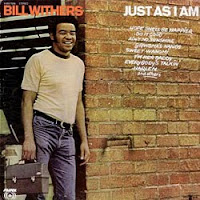
Case in point: in my last Beatles post way back in September(!), I ragged on the majority of Let It Be covers out there, 'cause they're mostly lame. I finally settled on a Bill Withers take as a decent offering.

Now. . . I would've expected all y'all to have written in to remind me that in 1972, the Verona (NJ) High School Jazz Ensemble scored an invite to the prestigious Montreux Jazz Festival in Switzerland, where they absolutely killed, with a set that included a nigh-perfect version of that vexing tune. Just so we're clear, that's high school ensemble, and Montreux Jazz Festival. Luckily for us all, my man Larry at the Funky16Corners blog (he's sort of like our music blog godfather) didn't forget, and so here're the goods, for your listening pleasure. C'mon people - it's no fun if you don't holler back.


Verona HS Jazz Ensemble: Let It Be [live]

Wednesday, September 23, 2009

Pablo Neruda Was Never Called an A**hole


. . .not in New York.


Just a quickie post, for those of you who got hooked on the weekly updates. Today marks the 36th anniversary of Pablo Neruda's death, which itself coincided with the Pinochet coup that overthrew the democratically elected Allende government in Chile in 1973. The following year, Phil Ochs organized the Friends of Chile benefit concert at Madison Square Garden, which also included Bob Dylan, Pete Seeger, the Beach Boys, and a couple of readings by Dennis Hopper, including the following Neruda poem.

Dennis Hopper: Pablo Neruda Poem [live]


Philistine that I am, I can't tell you which Neruda poem this is. And since this occurred during his lost decade, neither can Hopper. If anyone knows, that's what the comments section is for. A recording of the concert -
An Evening with Salvador Allende - was later released, and can be downloaded in its entirety here if you're interested.

Peace & Vinyl,
The KassaNostra
Thursday, September 17, 2009

The FABulous Return of. . . pt. 3


Was thinking about suspending the Beatles finale for a Mary Travers post, but I'm not enough of a PP&M fan to throw something ad hoc together that's also properly respectful. Something we'll get to later, maybe. Right now, let me tell you how it will be. . .

If you were born anytime after 1968, chances are that Bob Dorough was one of your favorite performers before you were ten years old, without your ever knowing his name. That's because Dorough (pronounced like The Explorer) was the artistic director behind ABC's Schoolhouse Rock! cartoon shorts that've been running on Saturday morning TV since the early 70s – think Three Is a Magic Number, among other classics. When not edu-taining millions of children, Dorough is better known as one of the most eclectic jazz singers of the last fifty years, having released close to two dozen albums, and holding the distinction of being the only vocalist to ever record with Miles Davis (on Davis' 1962 Sorcerer LP). Among his many accomplishments is a quickie collaboration with jazz bassist Steve Swallow: The 44th Street Portable Flower Factory was one of two EPs recorded as promotional giveaways for Scholastic Books. It's unbelievable where great music turns up sometimes. There very well may be better versions of Blackbird floating around, but there is only one Bob Dorough, and getting him into this blog gives me a warm and fuzzy feeling. Also, there aren't any better versions of Blackbird floating around, 'cause Dorough's that amazing.

The Portable Flower Factory: Blackbird


Gabor Szabo is Hungary's all-time greatest jazz guitarist, bar none. (Which lends a little something extra to the "he's world famous in Poland" gag.)
It'd be great if the global universality of Beatle-powered love and good will is what led him to a seemingly unlikely collaboration with Lena Horne, but in actuality, Szabo played on-and-off in her backup band for a few years, and they ended up cutting an album together in 1969; Rocky Raccoon was the b-side of the album's only hit, Watch What Happens. Look, this is just a flat-out brilliant cover – way bluesier and seedier than the original. Which may be for the best, given that the subject material covered here includes infidelity, fisticuffs, hard living, frontier-style vengeance, the cheap moralizing of a remorseless god, and quite possibly a large anthropomorphized nocturnal varmint cavorting undetected amongst humans. (Sorry – after years of completely misunderstanding the song, I can't not think of the protagonist that way. My version is just as poignant, dammit!)

Lena Horne & Gabor Szabo: Rocky Raccoon


How the hell did Come Together ever become a song to rock out to? A few power chords in the chorus notwithstanding, it's one of the Beatles' smoothest numbers. (There's no way that's really the Paul/Ringo rhythm section driving this tune. Don't care what George Martin says. I'm gonna need to see the birth certificate.) I'd really like to blame this on Aerosmith, whose crappy 1978 version turned it into a hard rock anthem. But that doesn't explain swagger-happy pre-'78 versions by Gladys Knight & The Pips, Ike & Tina Turner, and. . . Count Basie?!? (Yeah. . . the less said about that last one, the better.) So I really appreciate The Brothers Johnson for going against the grain on this one with a cover that taps into the original's inherent grooviness. The dual lead vocal effect is an especially nice touch.

The Brothers Johnson: Come Together


There's something about Annie Clark – better known onstage as St. Vincent – that scares the crap out of me. Seriously people, check out her video for Actor Out of Work. Every time she opens her mouth wide I think a murder of crows is gonna fly out and peck everyone bloody.
But. . . she's got a voice like frostbite, and her acute, gossamer vocals balance nicely with the porcelain-and-razor wire creepiness of her visual effect. I know she covered Dig a Pony for her Black Cab Session; here's a better audio take, from a 2007 show at the Modern Art Museum of Fort Worth. This song should be pushing all of your eerie-childlike-gibberish buttons anyway, even before you knew she did a take of it. Dig a pony, indeed! Don't the Children of the Corn sing this one in unison? (Not harmony, unison.) Well. . . they should.

St. Vincent: Dig a Pony [live]


If there's a more predictable way to wrap things up than with Let It Be, I can't think of it. Every recording artist in the history of the world may very well have covered this song at one time or another. Thing is, most of 'em play up the gospel angle of the song, which is a mistake. While the Beatles' version obviously draws cues from religious music, it really isn't anything more than an anthemic rock ballad with a little stained glass window dressing. Even John was put off by its generic quality, remarking that it could've just as easily been done by Wings. Artists who try to drag this song closer to its original roots quickly discover there's nowhere to go after those opening chords; they're thinking old-time gospel, but what they end up with is often overwrought, and sometimes even schmaltzy. With that in mind, I'm going with Bill Withers, who manages to pull off a rendition that's spiritual but also vibrant and uplifting. It turns out to be exactly the right way to handle the song, and it makes you wonder if he kept the arrangement in mind a year later when he wrote Lean on Me.

Bill Withers: Let It Be


BONUS NON-TOLLAND ALL-TIME KASSANOSTRA GREATEST BEATLES COVER EVER: Eleanor Rigby is a song we pretty much never sing in camp – we may be the only ones. Much like Let It Be, there are hundreds of recorded versions of this song. (A little Liverpudlian poverty and degradation are the perfect way to class up anyone's album, don'tcha know!) Unlike Let It Be, there are a lot of very good covers out there. Some of them – Aretha Franklin's come to mind – are transcendent. But! If the KassaNostra's learned one unimaginably vital thing in all his years scouring the world for musical sublimity, it's this: never underestimate the raw lounge jazz power of five Filipino-American sisters (plus backing combo) and guiding ex-Zappa collaborator to lay bare the innate depravity in a hit song about the death of a forlorn spinster, and to do it with unquestionable style. Ladies and gentlemen, I give you The Third Wave (from their 1969 Here and Now LP).

The Third Wave: Eleanor Rigby


And that's it! Next week: The Rolling Stones Kinderland tribute extravaganza!!! Hmmmm. . . may need six posts to cover that one.

Peace & Vinyl,
The KassaNostra

Wednesday, September 9, 2009

The FABulous Return of. . . pt. 2

Before we get back to the Beatles, Gerry Tenney asked me to mention that Khane Yachness is the translator without whom Schvereh Togedike Nakht would not have been. Gerry says, "She was a Kinderland person herself, and her father Zalmen Yachness was the Lakeland social director for many years, and her mother sang in the chorus and was an actress." Gerry and Khane: a dank.

And now. . .

There are at least a few artists you could accuse of injecting death into a cover version, but James Taylor would probably not top your list. And yet here he is, referencing his own demise at the end of With a Little Help from My Friends. Nu? Not sure what he's up to. Maybe it's the ultimate extension of the sensitive folksinger persona? This song - revised last line and all - was his standard opening number for early 70s live gigs (this particular recording is a 1970 concert at Harvard's Sanders Theatre). Whatever his reasons, kudos to Taylor for steering clear of the clichéd suicide/drug OD approach, in favor of a scenario where his friends bear the responsibility for having done him in. Maybe they finally got sick of the sensitive folksinger persona.

Actually, the Beatles/James Taylor connection is surprisingly conspicuous. Taylor's self-titled debut was released in 1969 on Apple Records, having been recorded the previous year at London's Trident Studios, where the Beatles were next door putting The White Album together. The "holy host of others standing around me" in Carolina on My Mind is a reference to the lads, a couple of whom did uncredited work on the song (the initial release, not the more familiar version from 1976). It's a matter of record that when Bob Dylan first met the Beatles, he introduced them to marijuana. You are free to let your mind wander in imagining what momentous development transpired as a result of Taylor hooking up with the Fab Four. The KassaNostra knows enough to steer clear of such debauchery.

James Taylor: With a Little Help from My Friends [live]


I wanted to include this version of Hello Goodbye by the Soulful Strings specifically as a bulwark against the innumerable classical/easy listening Beatles tribute albums in existence, just waiting around to be snatched up by the gullible, the ignorant, and the obsessive Beatles fan. (Not going to take a shot here at the redundancy of all three. . . oh wait, I just did.) Richard Evans was the in-house svengali at Cadet Records in the 1960s and 70s: an accomplished musician (played bass for Sun Ra and Ahmad Jamal), producer and arranger (Marlena Shaw, Dorothy Ashby, Ramsey Lewis, Richard "Groove" Holmes, Brother Jack McDuff, to name a few) - he formed the Strings in 1966, a time when whitebread cover LPs of hit pop tunes were ubiquitous. "Strings" is a bit of a misnomer, since they operated with an electric rhythm section and incorporated a variety of other instruments into their sound. But the group, bolstered by Evans' magnetic arrangements, flies high above the sea of easy listening pap, with a soul/funk dynamic that paints a musical picture that's both easily recognizable and intriguingly different. Listen here in the second verse/chorus, how the rhythm guitar, bass, flute, strings and vibes all dance around each other, seamlessly passing off the lead and then coming back to undergird the melody, and how all that suddenly gives way in the bridge to the groove of the lead guitar solo, which in turn gets reigned in by the strings when they come in with the familiar coda. It's all rather wonderful.

Soulful Strings: Hello Goodbye


We acknowledge the Lennon/McCartney songwriting team as something more than just a pop act - it's a template for the loftiest possibilities of pop music, and that's how it should be. But then we also should acknowledge that a really great Beatles rendition requires a performance that's up to the task of respecting the source material. Nobody ever expects magic from a high school Gilbert and Sullivan production; subsequently, while the ethos of rock dictates that any combo can and should muscle their way through any song, the fact remains that the Beatles are great in part because they transcended the limits of rock music to incorporate a pop sensibility that opened the door on countless sonic innovations. That's not to say that every attempt to cover the Beatles should realize a certain level of sophistication. But many, many such attempts - in every genre - fail because they willfully ignore the complexity of the music. And it's a rare and transcendent thing when someone like Evans comes along and completely gets it right.

Anyway. . .

You say you want a Revolution? You gonna call on a buncha snotty puss-puss basement-dwelling mushy pea and turnip fawningly polite sons of the motherland fugazi Howlin' Wolf parody dirty collar-wearin' tea-sippin' empire-lovin' nancy boys? Or are you gonna call on Nina Simone? There's the Beatles version of the song, and there's Simone's "cover" version, and only one of them is about getting your hands dirty. (And right now, you should all be thinking the same thing: it's about damn time the KassaNostra put some Nina freakin' Simone up on this site! I hear ya.)

Nina Simone: Revolution


Chubby Checker had a career-defining hit with The Twist back in 1960, and then spent the next fifteen years spiraling towards irrelevance. Luckily, when a guy hits it that big, somebody'll always pay him to make records. Also luckily, the further away Checker got from his moment in the sun, the more he seemed keen on pushing the musical envelope. His 1971 Chequered! LP is, if not an outright masterpiece, than one of the finest cultural oddities you'll ever listen to. He wasn't exactly there yet in 1969, but his cover of Back in the U.S.S.R. is still a fine effort. The decision to approach this song in complete over-the-top Vegas lounge act fashion was undeniably the correct choice. There are Superbowl halftime shows less choreographed than this production, but Checker's heart is clearly driving the performance, and the unabashed excess behind him is glorious. If the Beatles were less image-conscious, they would've cut this live, with a 30-piece band and two-hundred showgirls in the buff save for tastefully arranged babushkas; Chubby's version is the next best thing.

Chubby Checker: Back in the U.S.S.R.


To wrap this post up, I give you a 1969 BBC recording of Ob-La-Di, Ob-La-Da, by Desmond Dekker (plus a brief segue into his own tune, Wise Man). As far as I know, this wasn't formally released until it appeared on a 2005 compilation CD. I'm guessing he's being backed by his longtime group The Aces - no info to confirm that, but the timing's right. There's nothing particularly special about this recording, but I think we can all agree that the coolness factor goes through the roof when you're able to cover the pop song the Beatles wrote specifically about you. No word on what his actual wife, Margaret, thought about this Molly floozy they set him up with. By the way, I know a lot of people hate this song, but it's the KassaNostra's favorite McCartney-penned tune.

Desmond Dekker: Ob-La-Di, Ob-La-Da/Wise Man


Okay - part 2 is in the books. Part 3 in a week. Until then, stop yer minds from wandering. . .

Peace & Vinyl,
The KassaNostra