Wednesday, September 23, 2009

Pablo Neruda Was Never Called an A**hole


. . .not in New York.


Just a quickie post, for those of you who got hooked on the weekly updates. Today marks the 36th anniversary of Pablo Neruda's death, which itself coincided with the Pinochet coup that overthrew the democratically elected Allende government in Chile in 1973. The following year, Phil Ochs organized the Friends of Chile benefit concert at Madison Square Garden, which also included Bob Dylan, Pete Seeger, the Beach Boys, and a couple of readings by Dennis Hopper, including the following Neruda poem.

Dennis Hopper: Pablo Neruda Poem [live]


Philistine that I am, I can't tell you which Neruda poem this is. And since this occurred during his lost decade, neither can Hopper. If anyone knows, that's what the comments section is for. A recording of the concert -
An Evening with Salvador Allende - was later released, and can be downloaded in its entirety here if you're interested.

Peace & Vinyl,
The KassaNostra

Thursday, September 17, 2009

The FABulous Return of. . . pt. 3


Was thinking about suspending the Beatles finale for a Mary Travers post, but I'm not enough of a PP&M fan to throw something ad hoc together that's also properly respectful. Something we'll get to later, maybe. Right now, let me tell you how it will be. . .

If you were born anytime after 1968, chances are that Bob Dorough was one of your favorite performers before you were ten years old, without your ever knowing his name. That's because Dorough (pronounced like The Explorer) was the artistic director behind ABC's Schoolhouse Rock! cartoon shorts that've been running on Saturday morning TV since the early 70s – think Three Is a Magic Number, among other classics. When not edu-taining millions of children, Dorough is better known as one of the most eclectic jazz singers of the last fifty years, having released close to two dozen albums, and holding the distinction of being the only vocalist to ever record with Miles Davis (on Davis' 1962 Sorcerer LP). Among his many accomplishments is a quickie collaboration with jazz bassist Steve Swallow: The 44th Street Portable Flower Factory was one of two EPs recorded as promotional giveaways for Scholastic Books. It's unbelievable where great music turns up sometimes. There very well may be better versions of Blackbird floating around, but there is only one Bob Dorough, and getting him into this blog gives me a warm and fuzzy feeling. Also, there aren't any better versions of Blackbird floating around, 'cause Dorough's that amazing.

The Portable Flower Factory: Blackbird


Gabor Szabo is Hungary's all-time greatest jazz guitarist, bar none. (Which lends a little something extra to the "he's world famous in Poland" gag.)
It'd be great if the global universality of Beatle-powered love and good will is what led him to a seemingly unlikely collaboration with Lena Horne, but in actuality, Szabo played on-and-off in her backup band for a few years, and they ended up cutting an album together in 1969; Rocky Raccoon was the b-side of the album's only hit, Watch What Happens. Look, this is just a flat-out brilliant cover – way bluesier and seedier than the original. Which may be for the best, given that the subject material covered here includes infidelity, fisticuffs, hard living, frontier-style vengeance, the cheap moralizing of a remorseless god, and quite possibly a large anthropomorphized nocturnal varmint cavorting undetected amongst humans. (Sorry – after years of completely misunderstanding the song, I can't not think of the protagonist that way. My version is just as poignant, dammit!)

Lena Horne & Gabor Szabo: Rocky Raccoon


How the hell did Come Together ever become a song to rock out to? A few power chords in the chorus notwithstanding, it's one of the Beatles' smoothest numbers. (There's no way that's really the Paul/Ringo rhythm section driving this tune. Don't care what George Martin says. I'm gonna need to see the birth certificate.) I'd really like to blame this on Aerosmith, whose crappy 1978 version turned it into a hard rock anthem. But that doesn't explain swagger-happy pre-'78 versions by Gladys Knight & The Pips, Ike & Tina Turner, and. . . Count Basie?!? (Yeah. . . the less said about that last one, the better.) So I really appreciate The Brothers Johnson for going against the grain on this one with a cover that taps into the original's inherent grooviness. The dual lead vocal effect is an especially nice touch.

The Brothers Johnson: Come Together


There's something about Annie Clark – better known onstage as St. Vincent – that scares the crap out of me. Seriously people, check out her video for Actor Out of Work. Every time she opens her mouth wide I think a murder of crows is gonna fly out and peck everyone bloody.
But. . . she's got a voice like frostbite, and her acute, gossamer vocals balance nicely with the porcelain-and-razor wire creepiness of her visual effect. I know she covered Dig a Pony for her Black Cab Session; here's a better audio take, from a 2007 show at the Modern Art Museum of Fort Worth. This song should be pushing all of your eerie-childlike-gibberish buttons anyway, even before you knew she did a take of it. Dig a pony, indeed! Don't the Children of the Corn sing this one in unison? (Not harmony, unison.) Well. . . they should.

St. Vincent: Dig a Pony [live]


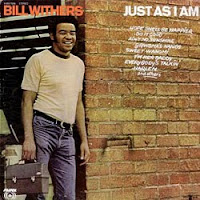
If there's a more predictable way to wrap things up than with Let It Be, I can't think of it. Every recording artist in the history of the world may very well have covered this song at one time or another. Thing is, most of 'em play up the gospel angle of the song, which is a mistake. While the Beatles' version obviously draws cues from religious music, it really isn't anything more than an anthemic rock ballad with a little stained glass window dressing. Even John was put off by its generic quality, remarking that it could've just as easily been done by Wings. Artists who try to drag this song closer to its original roots quickly discover there's nowhere to go after those opening chords; they're thinking old-time gospel, but what they end up with is often overwrought, and sometimes even schmaltzy. With that in mind, I'm going with Bill Withers, who manages to pull off a rendition that's spiritual but also vibrant and uplifting. It turns out to be exactly the right way to handle the song, and it makes you wonder if he kept the arrangement in mind a year later when he wrote Lean on Me.

Bill Withers: Let It Be


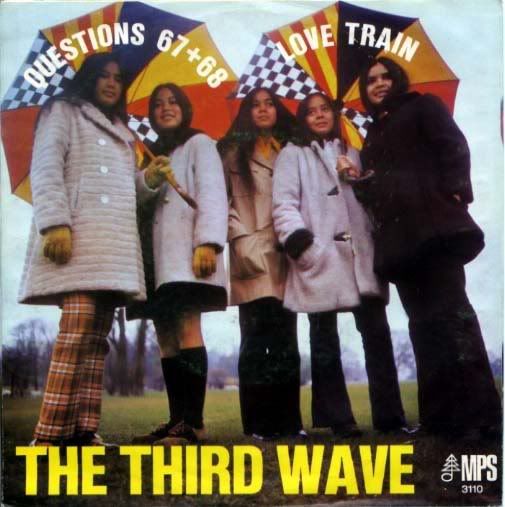
BONUS NON-TOLLAND ALL-TIME KASSANOSTRA GREATEST BEATLES COVER EVER: Eleanor Rigby is a song we pretty much never sing in camp – we may be the only ones. Much like Let It Be, there are hundreds of recorded versions of this song. (A little Liverpudlian poverty and degradation are the perfect way to class up anyone's album, don'tcha know!) Unlike Let It Be, there are a lot of very good covers out there. Some of them – Aretha Franklin's come to mind – are transcendent. But! If the KassaNostra's learned one unimaginably vital thing in all his years scouring the world for musical sublimity, it's this: never underestimate the raw lounge jazz power of five Filipino-American sisters (plus backing combo) and guiding ex-Zappa collaborator to lay bare the innate depravity in a hit song about the death of a forlorn spinster, and to do it with unquestionable style. Ladies and gentlemen, I give you The Third Wave (from their 1969 Here and Now LP).

The Third Wave: Eleanor Rigby


And that's it! Next week: The Rolling Stones Kinderland tribute extravaganza!!! Hmmmm. . . may need six posts to cover that one.

Peace & Vinyl,
The KassaNostra

Wednesday, September 9, 2009

The FABulous Return of. . . pt. 2

Before we get back to the Beatles, Gerry Tenney asked me to mention that Khane Yachness is the translator without whom Schvereh Togedike Nakht would not have been. Gerry says, "She was a Kinderland person herself, and her father Zalmen Yachness was the Lakeland social director for many years, and her mother sang in the chorus and was an actress." Gerry and Khane: a dank.

And now. . .

There are at least a few artists you could accuse of injecting death into a cover version, but James Taylor would probably not top your list. And yet here he is, referencing his own demise at the end of With a Little Help from My Friends. Nu? Not sure what he's up to. Maybe it's the ultimate extension of the sensitive folksinger persona? This song - revised last line and all - was his standard opening number for early 70s live gigs (this particular recording is a 1970 concert at Harvard's Sanders Theatre). Whatever his reasons, kudos to Taylor for steering clear of the clichéd suicide/drug OD approach, in favor of a scenario where his friends bear the responsibility for having done him in. Maybe they finally got sick of the sensitive folksinger persona.

Actually, the Beatles/James Taylor connection is surprisingly conspicuous. Taylor's self-titled debut was released in 1969 on Apple Records, having been recorded the previous year at London's Trident Studios, where the Beatles were next door putting The White Album together. The "holy host of others standing around me" in Carolina on My Mind is a reference to the lads, a couple of whom did uncredited work on the song (the initial release, not the more familiar version from 1976). It's a matter of record that when Bob Dylan first met the Beatles, he introduced them to marijuana. You are free to let your mind wander in imagining what momentous development transpired as a result of Taylor hooking up with the Fab Four. The KassaNostra knows enough to steer clear of such debauchery.

James Taylor: With a Little Help from My Friends [live]


I wanted to include this version of Hello Goodbye by the Soulful Strings specifically as a bulwark against the innumerable classical/easy listening Beatles tribute albums in existence, just waiting around to be snatched up by the gullible, the ignorant, and the obsessive Beatles fan. (Not going to take a shot here at the redundancy of all three. . . oh wait, I just did.) Richard Evans was the in-house svengali at Cadet Records in the 1960s and 70s: an accomplished musician (played bass for Sun Ra and Ahmad Jamal), producer and arranger (Marlena Shaw, Dorothy Ashby, Ramsey Lewis, Richard "Groove" Holmes, Brother Jack McDuff, to name a few) - he formed the Strings in 1966, a time when whitebread cover LPs of hit pop tunes were ubiquitous. "Strings" is a bit of a misnomer, since they operated with an electric rhythm section and incorporated a variety of other instruments into their sound. But the group, bolstered by Evans' magnetic arrangements, flies high above the sea of easy listening pap, with a soul/funk dynamic that paints a musical picture that's both easily recognizable and intriguingly different. Listen here in the second verse/chorus, how the rhythm guitar, bass, flute, strings and vibes all dance around each other, seamlessly passing off the lead and then coming back to undergird the melody, and how all that suddenly gives way in the bridge to the groove of the lead guitar solo, which in turn gets reigned in by the strings when they come in with the familiar coda. It's all rather wonderful.

Soulful Strings: Hello Goodbye


We acknowledge the Lennon/McCartney songwriting team as something more than just a pop act - it's a template for the loftiest possibilities of pop music, and that's how it should be. But then we also should acknowledge that a really great Beatles rendition requires a performance that's up to the task of respecting the source material. Nobody ever expects magic from a high school Gilbert and Sullivan production; subsequently, while the ethos of rock dictates that any combo can and should muscle their way through any song, the fact remains that the Beatles are great in part because they transcended the limits of rock music to incorporate a pop sensibility that opened the door on countless sonic innovations. That's not to say that every attempt to cover the Beatles should realize a certain level of sophistication. But many, many such attempts - in every genre - fail because they willfully ignore the complexity of the music. And it's a rare and transcendent thing when someone like Evans comes along and completely gets it right.

Anyway. . .

You say you want a Revolution? You gonna call on a buncha snotty puss-puss basement-dwelling mushy pea and turnip fawningly polite sons of the motherland fugazi Howlin' Wolf parody dirty collar-wearin' tea-sippin' empire-lovin' nancy boys? Or are you gonna call on Nina Simone? There's the Beatles version of the song, and there's Simone's "cover" version, and only one of them is about getting your hands dirty. (And right now, you should all be thinking the same thing: it's about damn time the KassaNostra put some Nina freakin' Simone up on this site! I hear ya.)

Nina Simone: Revolution


Chubby Checker had a career-defining hit with The Twist back in 1960, and then spent the next fifteen years spiraling towards irrelevance. Luckily, when a guy hits it that big, somebody'll always pay him to make records. Also luckily, the further away Checker got from his moment in the sun, the more he seemed keen on pushing the musical envelope. His 1971 Chequered! LP is, if not an outright masterpiece, than one of the finest cultural oddities you'll ever listen to. He wasn't exactly there yet in 1969, but his cover of Back in the U.S.S.R. is still a fine effort. The decision to approach this song in complete over-the-top Vegas lounge act fashion was undeniably the correct choice. There are Superbowl halftime shows less choreographed than this production, but Checker's heart is clearly driving the performance, and the unabashed excess behind him is glorious. If the Beatles were less image-conscious, they would've cut this live, with a 30-piece band and two-hundred showgirls in the buff save for tastefully arranged babushkas; Chubby's version is the next best thing.

Chubby Checker: Back in the U.S.S.R.


To wrap this post up, I give you a 1969 BBC recording of Ob-La-Di, Ob-La-Da, by Desmond Dekker (plus a brief segue into his own tune, Wise Man). As far as I know, this wasn't formally released until it appeared on a 2005 compilation CD. I'm guessing he's being backed by his longtime group The Aces - no info to confirm that, but the timing's right. There's nothing particularly special about this recording, but I think we can all agree that the coolness factor goes through the roof when you're able to cover the pop song the Beatles wrote specifically about you. No word on what his actual wife, Margaret, thought about this Molly floozy they set him up with. By the way, I know a lot of people hate this song, but it's the KassaNostra's favorite McCartney-penned tune.

Desmond Dekker: Ob-La-Di, Ob-La-Da/Wise Man


Okay - part 2 is in the books. Part 3 in a week. Until then, stop yer minds from wandering. . .

Peace & Vinyl,
The KassaNostra

Monday, August 31, 2009

The FABulous Return of. . . pt. 1

Sholem Aleichem, my rockin’ kinderlachen! It’s the KassaNostra, comin’ back atcha with the cream of the Tolland scene – the music that makes your head swim, your booty shake, and your conscience do a boom-chicka-boom! I trust everyone had a groovy summer – yours truly spent his nights spinning harmonious soul sounds as the in-house DJ at Junior's Restaurant in beautiful downtown Brooklyn!

What?

Oh. PSYCHE! Yeah, that totally didn't happen, the rumors to the contrary. But it sounded sooooooo good, I just had to see what it looked like in print. Actually, your KassaNostra was hard at work laying the groundwork for some very excellent forthcoming posts. Got lots to share with you guys, so let's get right into it.

In my last post before I closed down for the summer, I took a swipe at the Beatles and those who love their music.
(Hmmmm. . . the KassaNostra vs. the rest of the world. I like those odds!) But why make waves when you can make beautiful harmony? And so, what with numbers by the Fab Four permeating the slices, I thought about giving you guys some camp-related Beatles music to celebrate my grand re-opening. Beatles music being the greatest universal equalizer there is, it only stands to reason that we sing our fair share of it in Tolland. Think about it – go to a peace vigil, start singing Put My Name Down, and everyone else gives you some serious distance and the hairy eyeball. Anarchists? Separatist vegans? Father rapers? But break into All You Need Is Love, and everyone starts joining in like we was all on the same sing-down team. See? They really are more popular than Jesus.

Here's the thing: I could tell you that we sing Let It Be in camp, but would you really need me to follow-up with the actual tune? Wherever you are, reading this post right now, aren't there now at least 500 ways of immediately getting a copy of that song? Assuming that you somehow haven't already committed every cadence and tonal identifier of it to memory? You're thinking about it right now, aren't you? You're up to the part where Billy Preston comes in on the organ, right? Greatest universal equalizer. No joke.

Anyway, since what we do every time we sing Lennon/McCartney is perform a cover of the original, I thought it would be right and proper (and vastly more interesting) if I gave you some cover versions of the Beatles songs that have entered the Tolland canon over the years. So I made a list, pared it down to fifteen or so contenders, and then decided that not only did I not want to have to pick and choose between dynamite music, but that it would be way more cool if I gave you a Kinderland/Beatles tribute/extravaganza in three parts! Fifteen (maybe sixteen) tunes comin' atcha, all in the next three weeks.


But before we dive in, I should note that I'm using an extremely loose definition of what constitutes "Kinderland approved" in this case. Obviously, there are some songs that don't make for good singalong material, and so they're not widely performed in the Greater Tolland Area (though I'd kill to see Maddy tackle Tomorrow Never Knows). And while some of these are fairly obvious choices, I'll admit that some of them I'm a little sketchy on the whens and wheres. Feel free to register complaints in the comments section, for which my standard reply remains: start your own damn blog. The rest of you just rattle your jewelry.

First thing I got for ya'll is gonna make the purists howl. But the way I see it, this is way more than just a cover. Back in the day, DJ Jazzy Jeff was definitely Ringo to the johnpaulgeorge supernova that was his partner, Will Smith. I mean, you didn't even know he had a solo career, right? And yet years after the fact, he's still laying down beats (and frankly, proving just who had the superior musical chops in his old duo). His guest MC on this particular piece of sublimity is the indefatigable Biz Markie. That's right. . . it's an old school throwdown, and the Biz is most definitely up to the challenge. Which should come as no surprise – the Biz has that same manic energy that the Beatles did back when they were so cool they only wore black. If he showed up as a mad scientist in Help! or a train conductor in A Hard Day's Night, it wouldn't surprise you for a second.

DJ Jazzy Jeff feat. Biz Markie: $ Can't Buy Me Love


Speaking of Ringo's best-known malapropism, any Kinderland/Beatles tribute/extravaganza has got to include Gerry Tenney's homage to Liverpool's finest: Schvereh Togedike Nakht. During his stint as camp's music specialist, I remember Gerry explaining that in order to secure permission to record the song, he had to go through the reps of the guy who owned the rights to the Beatles' catalog at that time. My friends, let me go on record right here and now and declare that any song with a backstory that includes Gerry, the Beatles and Michael Jackson is an automatic fave of the KassaNostra. Performed with his then-band The Lost Tribe, with Gerry singing the lead himself (which I guess makes him the smart one). Definitely check out his blogsite to see which song gets the yiddisher treatment next.

Gerry Tenney & The Lost Tribe: Schvereh Togedike Nakht


One thing I find when listening to non-Beatles play Beatles songs is that it never pays to try and sound like the Beatles. Everybody in the world already knows what every Beatles song sounds like. There are Yanamamo tribesmen in the Amazon that mimic John's Scouser twang when they sing Eight Days a Week. It sounds painfully obvious, but the trick, I think, is to make the sound your own – to feel comfortable working in the material (this goes doubly when considering the iconic nature of the Beatles' catalog). I think that's what I like so much about David Porter's take on Help! Porter was Isaac Hayes' longtime writing partner at Stax Records before he tried his hand at a solo recording career in the early 70s. With Help!, he strips the song clean of the urgency that runs through the original. When John Lennon sings it, it's a young man crying out for support; when Porter sings it, it's with the self-assurance that comes with maturity. He's not asking for help, he's celebrating the fact that he already knows and trusts them that got his back.

David Porter: Help!


Next up. . . I say "Dionne Warwick," you say "Psychic Friends." It's a sad, sad thing that Warwick's gonna be remembered for everything but her best work. Screw yer Beatles, man – the single best moment in 60s music might just be the breakdown in Walk On By. Her talent notwithstanding, Warwick benefited from an early relationship with the songwriting team of Hal David and Burt Bacharach. That in turn created a lot of access to top arrangers and sessions men. Plus her label, Scepter Records, recognized her as their showcase artist and completely feted her. It's the factory approach to hitmaking, but hey. . . when it works, it surely does deliver. There's so much to like about her cover of We Can Work It Out, starting with the maudlin intro that quickly surges into an effortless groove. I always thought the Beatles got this one wrong. It reads like a statement or an affirmation, but they run through it so tepidly – if dude ever actually sang it to you like that, you'd be giggling inside of a minute. Fortunately, Warwick gets it for what it is, and completely blows the doors off of it. For me, this take tops both the original and the better-known Stevie Wonder version.

Dionne Warwick: We Can Work It Out


Finally. . . it's Otis Redding. And he's singing Day Tripper. Do you really need to know anything else? Man, this is so unbelievably good, I can't believe the Stax/Volt guys didn't release this as a single.


Otis Redding: Day Tripper


Thus endeth part 1 – part 2 to follow next week. Welcome home, boys and girls. Insert your own "long and winding road" comment here.

Peace & Vinyl,

The KassaNostra

Saturday, June 27, 2009

A Gute Nakht!

Assuming you've actually spent time in Kinderland, you don't need me to tell you that the Tolland scene is rife with incongruities (look no further than the fact that we refer to eleven-year-olds as "seniors"). Quirkiness in camp is a given, but the quirks themselves have become so institutionalized that it usually takes a moment to spot them. Or in some cases, hear them. Which brings me to my burning question of the moment: why do we have a standard in the canon for saying "goodnight," but not a single tune for saying "goodbye?" Allow me to expound a few thoughts. . .

1. We say goodnight to each other a lot more than we say goodbye.

Makes sense, no? Over a seven-week summer, we regularly have cause to wish each other goodnight. It's both a pleasant way to close the evening and a formality, given that we'll almost certainly reconvene mere hours from having made the gesture. That makes a round of Goodnight Irene perfect for the occasion: modest, topical, and can be hammed up just enough without descending into abject schmaltz. By contrast, there are really only two formal occasions for saying goodbye to each other with any sense of finality. (It really wouldn't pay to sing off a group leaving on an overnight, or even a quick run to Scoops.) (Although if someone found a way to make that happen, it would be undeniably awesome.) (Bonus points for writing an original song to be sung exclusively for Scoops runs.)

All that may be true, but it still rings a bit hollow given that the end of a Kinderland session is a rather momentous occasion. It's the kind of experience that's all things to all people, but since camp is so decidedly personal, I think we generally expend the last of our energy seeing to our more intimate friendships, which subsequently causes any campwide sayonara to feel lacking, or at the very least, a scattershot affair. Hey. . . I love standing on ceremony. I was there when the seven-weekers first started ritually tossing the four-weekers as they pulled out on the bus. I still can't eat a Tootsie Pop without getting a warm fuzzy feeling. But that final campwide share – with everyone distracted with crying and hugs and crying and signing pillowcases and crying – just doesn't cut it. Something more definitively ceremonial would go a long way towards generating a coalescing moment, and a "Goodbye Irene" song might just be the best way to make that happen.

2. It gets the job done.

One of my all-time fave bands – the early-90s pop-punk outfit Too Much Joy – wrote themselves a theme song (appropriately titled Theme Song) to close out their third album. It's an immensely catchy tune with a sing-along chorus that even the most inebriated fan couldn't possibly forget, and it quickly became their standard for closing out all their shows. The brilliance of this was twofold: it guaranteed that every show wrapped with wildly spirited mass audience participation, and it conclusively marked the end of the show. No lingering around for a possible second encore, no idiot fans calling out requests even after the lights came up, no ambiguity whatsoever.

That kind of rock-steady certainty isn't required for saying goodbye (the implied threat of missing the bus takes care of that). But try getting a group of kids up from a campfire or out of Robeson to face the prospect of lights out. It's like herding sheep, if the sheep were mules. Or G8 Summit protesters. So. . . cue up Goodnight Irene. No one can argue with the unequivocal power of a universally recognized finale. I guarantee that if you've ever heard Ira play this, it was the last song on his set list that evening.

Too Much Joy: Theme Song [live]


3. It's how The Weavers did it.

I won’t claim to be an expert on this, but I'm willing to bet that of all the pre-1960 songs in the slices, over half were Weavers standards (three-quarters, if you don't count the Yiddishkeit songs). Especially the more obscure stuff, where authorship is unclear or not well known: Miner's Lifeguard, Drinking Gourd, Midnight Special, Eddystone Light, Banks of Marble, etc., etc. Goodnight Irene, released on Decca in 1950, was their debut single.

Look, I get it. They were the vanguard of the folk-revival movement, and almost everybody took cues from them. It's not an uncommon thing in music – think about how Bob Marley dominates people's understanding of reggae, or how Dylan has become the gold standard against which all other 60s folk acts get measured. Besides, what else was the Hopewell Junction crowd supposed to sing 'round the campfire? Louis Jordan? Gene Pitney? The Andrews Sisters? And above all else, Pete, Fred, Ronnie and Lee made some great music. Really. Still, a pretty justifiable knock on the old left is that they routinely let political-minded groupthink determine their artistic preferences, and fealty to The Weavers as the alpha and omega of recorded music is no exception. (Before anyone commences to tear me a new one in the comments, answer me this: how many Ralph Fasanella prints do you own? I rest my case.)

4. There's a dearth of iconic goodbye songs.

At least not that many that fit our criteria. Remember that it's got to be a song that can be played on acoustic guitar and sung (the chorus, anyway) by a large crowd. It'd help if an artist about whom Ira retains some archaic trivial knowledge had performed it (trust me – it just would). It also needs some general relevance. Most goodbye songs are written from a personal perspective, with the singer's farewells going out to a particular somebody with a particular backstory. A song like Every Time We Say Goodbye is a true classic, but it completely fails on every count. (Although it'd be pretty damn cool if Ira turned out to be a closet Cole Porter fan.)

(While I'm on the subject, something needs to be said about the miscasting of In My Life as an appropriate goodbye song. I'll admit to having some very mixed feelings about The Beatles, and I apologize to anyone whose sacred cows I'm about to grind to hamburger, but c’mon. . . It’s a song that's specifically about not getting bogged down in sentiment at the expense of real present-tense emotional attachment. Singing it as a Kinderland sendoff is as fitting as performing Draft Dodger Rag at a USO benefit. Plus it's maudlin, in the way that all pop songs with harpsichords are maudlin. Maybe it's actually only sung sporadically in camp, but it's got the staying power of a recurring abscess. I suspect that someone's taken a stab at this every year since it's release in 1965, and I suspect that there are still people for whom no summer is complete without another mawkish rendition. Further proof that The Beatles will never leave us alone. Ever.)

Anyway, lucky for y'all, you can count on the KassaNostra to come through for you once again: I Don't Want to Go Home, by Southside Johnny & The Asbury Jukes (title track from their 1976 debut album). I don't like to brag, and I don't believe in making definitive statements (at least ones that aren't intended to stir up trouble), but really, this song is ideal. Listen to it, and then close your eyes and imagine all of camp singing it together. . . maybe at a slightly slower tempo, maybe with even more gusto on that recurring maxim than even poor Johnny himself can muster. Perfect, is it not?

Southside Johnny & The Asbury Jukes:
I Don't Want to Go Home


Toldja so.

And yet somewhere between my caustic harping and my unrealized musical utopian fantasies, there's a warm place in my heart for all you purists out there. So to you, I offer a summer's worth of forlorn lullaby melancholia: ten takes on what truly is one of the sweetest and saddest songs ever written. Use them wisely.


Have a wonderful summer – your assignment is to fall in love with at least one new song by the end of August and tell me about it.

Peace & Vinyl,
The KassaNostra


CODA: Just when I thought I was out. . . I was all set to put a wrap on this post and send it out over the intertubes. And then Michael Jackson died (maybe you heard something about that). I was never a big MJ fan – grew up without MTV but with two (count 'em) classic rock radio stations, so I never had a fighting chance to be mesmerized by that famous Jackson charm. But I got no problem with the "troubled genius" epitaph that everyone else seems to have settled on. Frankly, one mark of a true genius is when their body of work is adaptable to any given situation. As it turns out, Jackson and his brothers recorded an excellent goodbye song of their very own: 1971's Never Can Say Goodbye. So long, Mike. And remember kids. . . We are here to change the world!

Jackson 5: Never Can Say Goodbye


Sunday, May 31, 2009

Dance Dance Revolution, pt. 2

Anyone else out there feel like I've been falling down on the job lately? I'm averaging about two posts a month right now, which is probably what I'd have said my goal was when I started out. But two weeks go by, and I start feeling like a slug. It ain't that I'm a sloth (not when it comes to all things music, anyway). It's that I keep starting these epic-sized treatises that spiral out of control faster than a Van Halen guitar lick. I promise: someday, you'll all read my 13,000-word disquisition, Paul Robeson, Hirsh Glick, Lucy Kaplansky, Gerry Tenny and M.I.A. vs. Nazi Frogmen in the Sonic Temple of Our Souls. While you're waiting, though, we might as well talk about Draggin' the Line.

Or "Snoopy," as we're fond of calling it 'round Colebrook River Road. And only us, apparently. Marathon research jags into the annals of recorded ethnomusicological history have produced nary a reference connecting the ubiquitous beagle to Tommy James. (Other potential correlations also didn't pan out.) (Although if one of my readers can make a plausible link between Love and Draggin' the Line, I'll dance the damn thing in my skivvies at share this summer, that's how blown away I'll be.) Suffice to say, I got bubkis on the secret origins of this rechristening. What I can tell you about the tune itself is that it was released twice on the Roulette label (as a b-side in 1970, then as it's own single the following year), so there's a decent chance that the Hopewell Junction crowd has no idea what I'm talking about. (Any old-time kinderlachen care to weigh in?) It was James' first solo hit after breaking with longtime backing combo The Shondells, climbing to #4 on the Billboard Hot 100 chart in August of '71.

And like most camp-related things going down in August, this one is a little peculiar. For example:

• First of all, any time a top-40 anything enters the Tolland canon, it's a little surprising.

It's a weird song for the camp scene, given that it may be an overt paean to illicit drug use, or it may be an "I ❤ Jesus" anthem. (It was released on James' second solo LP, a religious-themed album called Christian of the World.) Possibly it's both.

I totally get the significance of the Snoopy connection. Whatever the song's meaning, it's all about laid-back gratification with life's simple pleasures – a fitting epigram if ever there was one. But it leads to a glaring conundrum when you take into account the opening line of the second verse: "My dog Sam eats purple flowers." As Draggin' the Line, there's no problem. As Snoopy, it calls into question the heated deliberations over the anthropomorphization of fictional animals, with a case at least as contentious as the whole Goofy/Pluto debate.

As a tune, it's almost impossible not to like. It's exactly the right blend of low-key psychedelia with a lazy-but-unswerving rhythmic beat. Dig that killer bass-riff opening, and the inspired trombone/trumpet call-and-response in the chorus. As a dance, it's also hard not to like: easy to learn, easy to remember, and maybe the only folkdance that improves the less energy you expend on it – perfect for those 90-degree afternoon dance sessions right before an hour of swim. And for the record, whoever came up with the opening count-off is a genius.

Tommy James: Draggin' the Line


Oh yeah. . . R.E.M. did a passable cover of Draggin' the Line for one of the Austin Powers soundtracks. Am I the only one who remembers that R.E.M. once promised if they were still together in the year 2000 they'd break up on principle? C'mon guys, show a little integrity. Bill Berry, thou art truly our hero. (This came out in 1999, so once again the KassaNostra narrowly avoids glaring hypocrisy! Michael Stipe can bite me.)

R.E.M.: Draggin' the Line


Just a quick heads-up before I go. It seems a little weird to keep posting about camp songs while camp's actually in session, so I'm planning to put the blog on hiatus for July and August. I'll post at least once, maybe more, before the end of this month. But those of you who rely on this site for your Kinderland music fix, you're gonna have to go without, or get yourself to Tolland this summer. Should my legions of fans choose to stage a Beatlemania-esque rally outside the camp office in an attempt to get me to change my mind, I may reconsider.

Peace & Vinyl,
The KassaNostra