Sunday, May 31, 2009

Dance Dance Revolution, pt. 2

Anyone else out there feel like I've been falling down on the job lately? I'm averaging about two posts a month right now, which is probably what I'd have said my goal was when I started out. But two weeks go by, and I start feeling like a slug. It ain't that I'm a sloth (not when it comes to all things music, anyway). It's that I keep starting these epic-sized treatises that spiral out of control faster than a Van Halen guitar lick. I promise: someday, you'll all read my 13,000-word disquisition, Paul Robeson, Hirsh Glick, Lucy Kaplansky, Gerry Tenny and M.I.A. vs. Nazi Frogmen in the Sonic Temple of Our Souls. While you're waiting, though, we might as well talk about Draggin' the Line.

Or "Snoopy," as we're fond of calling it 'round Colebrook River Road. And only us, apparently. Marathon research jags into the annals of recorded ethnomusicological history have produced nary a reference connecting the ubiquitous beagle to Tommy James. (Other potential correlations also didn't pan out.) (Although if one of my readers can make a plausible link between Love and Draggin' the Line, I'll dance the damn thing in my skivvies at share this summer, that's how blown away I'll be.) Suffice to say, I got bubkis on the secret origins of this rechristening. What I can tell you about the tune itself is that it was released twice on the Roulette label (as a b-side in 1970, then as it's own single the following year), so there's a decent chance that the Hopewell Junction crowd has no idea what I'm talking about. (Any old-time kinderlachen care to weigh in?) It was James' first solo hit after breaking with longtime backing combo The Shondells, climbing to #4 on the Billboard Hot 100 chart in August of '71.

And like most camp-related things going down in August, this one is a little peculiar. For example:

• First of all, any time a top-40 anything enters the Tolland canon, it's a little surprising.

• It's a weird song for the camp scene, given that it may be an overt paean to illicit drug use, or it may be an "I ❤ Jesus" anthem. (It was released on James' second solo LP, a religious-themed album called Christian of the World.) Possibly it's both.

• I totally get the significance of the Snoopy connection. Whatever the song's meaning, it's all about laid-back gratification with life's simple pleasures – a fitting epigram if ever there was one. But it leads to a glaring conundrum when you take into account the opening line of the second verse: "My dog Sam eats purple flowers." As Draggin' the Line, there's no problem. As Snoopy, it calls into question the heated deliberations over the anthropomorphization of fictional animals, with a case at least as contentious as the whole Goofy/Pluto debate.

As a tune, it's almost impossible not to like. It's exactly the right blend of low-key psychedelia with a lazy-but-unswerving rhythmic beat. Dig that killer bass-riff opening, and the inspired trombone/trumpet call-and-response in the chorus. As a dance, it's also hard not to like: easy to learn, easy to remember, and maybe the only folkdance that improves the less energy you expend on it – perfect for those 90-degree afternoon dance sessions right before an hour of swim. And for the record, whoever came up with the opening count-off is a genius.

Tommy James: Draggin' the Line


Oh yeah. . . R.E.M. did a passable cover of Draggin' the Line for one of the Austin Powers soundtracks. Am I the only one who remembers that R.E.M. once promised if they were still together in the year 2000 they'd break up on principle? C'mon guys, show a little integrity. Bill Berry, thou art truly our hero. (This came out in 1999, so once again the KassaNostra narrowly avoids glaring hypocrisy! Michael Stipe can bite me.)

R.E.M.: Draggin' the Line


Just a quick heads-up before I go. It seems a little weird to keep posting about camp songs while camp's actually in session, so I'm planning to put the blog on hiatus for July and August. I'll post at least once, maybe more, before the end of this month. But those of you who rely on this site for your Kinderland music fix, you're gonna have to go without, or get yourself to Tolland this summer. Should my legions of fans choose to stage a Beatlemania-esque rally outside the camp office in an attempt to get me to change my mind, I may reconsider.

Peace & Vinyl,
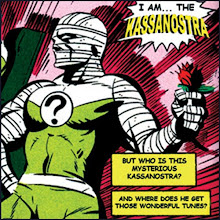
The KassaNostra

Friday, May 15, 2009

Just the Tsvey of Us

I had a whole different post ready for you guys, but then I read something neat, and wanted to share.

A couple of weeks ago I posted a video clip of Sister Rosetta Tharpe performing Down By the Riverside. That wasn't exactly spontaneous – I've been reading an excellent (and long overdue) biography about Tharpe, Gayle Wald's Shout, Sister, Shout! I didn't know a whole lot about Tharpe's life before, but enough that I didn't expect anything in the book to completely knock me on my ass. Then I read that Tharpe recorded a duet with Red Foley in 1952, and BANG! (KassaNostra's ass, the floor. The floor, KassaNostra's ass.)

Longtime fans of the Tolland scene will recognize Foley as the mellow baritone behind the folkdance craze Salty Dog Rag. In addition to his c&w bona fides, he was apparently a longtime admirer of gospel music, and the rare white performer who didn't shy away from the prospect of crossing over to black audiences. (Their duet – Have a Little Talk with Jesus – was released on the Decca label in 1955 as a b-side to Foley's cover of Tharpe's biggest hit, Strange Things Happening Every Day.) But the camp connection – the "Kinderland tie," if you will – is only part of this package. . . there's pertinent social significance to boot! Wald speculates that the Foley/Tharpe pairing is the first ever release of an interracial male/female duo:

"In the course of commercial popular recording, had two well-known stars of different races – people who, in Tennessee, were legally prohibited from marrying – ever appeared as a duo? When Foley and Kitty Wells, country music's two biggest stars the time, paired up in 1953 for the duet 'One By One,' listeners could imagine the two as a couple. Unlike Foley and Wells, Roy Rogers and Dale Evans (married in real life), or later, the African American rhythm-and-blues duo Mickey and Sylvia, Red and Rosetta could not claim the intimacy of lovers, although their voices would intertwine in song."

Now, granted, the song itself is as chaste as an Inter sleep-out. And Decca wasn't exactly looking to make music-recording history (Wald suggests they buried the release in their catalog, albeit in deference to financial motives above all else). But still, it's nice when the people you associate with for purely aesthetic reasons surprise you by doing the right thing. Besides which, it lends credence to the KassaNostra's longstanding campaign for an Olympic team commemorating the
Plato's Stepchildren episode of Star Trek.


By the way, Wald thinks this is a sub-par effort, but I like it just fine (and I hope no one's turned off by the song's less-than-Yiddishkeit nature). Foley and Tharpe balance each other in lively fashion, and it's an excellent example of the homogeneity in American roots music that the music industry has historically taken great pains to suppress. At one point in her book, Wald quotes black c&w singer/songwriter O.B. McClinton:

"You can take a black guy to Nashville from right out of the cotton fields with bib overalls and two watermelons in his back pockets, and they will call him r&b. You can take a white guy in a pinstripe suit who has never seen a cotton field, take him to Nashville right out of a subway in Manhattan, and they will call him country."

Red Foley & Sister Rosetta Tharpe:
Have a Little Talk with Jesus


Anyway, I dig both the song and the backstory – hope y'all do as well. And since we've started down the male/female duet path, I thought another couple of tunes in that genre would round out this post in appropriate fashion. So next up, I give you Bob Dylan and Joan Baez performing Deportee, as part of the Rolling Thunder Revue tour. For you Dylan completists out there (or the even rarer Joan Baez freak), this is from the second leg of touring in 1976, and was recorded live on May 23rd at Hughes Stadium at Colorado State University. Just for the record, this track does not appear on the official Rolling Thunder bootleg release that came out a few years ago. Also just for the record, re: the completists, I am not one of you – the KassaNostra firmly believes that the human brain can only absorb so much Dylan music in one lifetime, and with respect to his own sanity, has made the conscious decision to draw the line at the first sixteen studio albums, unless, of course, the new stuff totally kills, including the Basement Tapes, a few dozen random bootlegs, the complete Johnny Cash sessions, about two-thirds of the Wilburys stuff, his 2003 gospel album, and his absolute brilliant effort on the Band of the Hand soundtrack.

Bob Dylan & Joan Baez: Deportee [live]


Finally, to close, here's the married duo of Kim and Reggie Harris, with a very soulful version of If You Miss Me (ably assisted by Peter Yarrow, Bethany Yarrow and Rufus Cappadocia). I'm a little embarrassed to admit that I hadn't heard of the Harrises until friend-of-the-blog Howard Glass clued me in last month. It always feels a little weird to learn about underground folk artists. There's a bunch of internet outlets that I use to track the next big thing in a few different genres, but traditional folk music in the 1950s/60s model that we generally adhere to in camp is not one of them, even though it's such a natural vehicle for independent music. I'm sure that's an extension of the word-of-mouth traditions I grew up on, wherein you learned about a new act because you saw them play the latest anti-intervention rally, or open for Pete Seeger, before Pete ascended to national treasure status. All of which only serves to prove that either me or traditional folk music needs to be dragged kicking/screaming into the new millennia, and since it's almost assuredly me, I hereby vow to voluntarily walk that plank. While you're waiting for the inevitable splashing noises, be sure to check out the Harris website for additional tunes and CD ordering info.

Kim & Reggie Harris: If You Miss Me [live]


Speaking of Seeger, I'm a complete ass for missing out on his 90th birthday concert at Madison Square Garden. If anyone scored an unauthorized bootleg, definitely send me a copy c/o the camp office (mark it "educational supplies"). Everyone else should make sure to check out Katie Halper's very Tolland-centric review.

Peace & Vinyl,
The KassaNostra

Friday, May 1, 2009

Mishmash

Since today is May Day, I should probably think about spinning a few rounds of The Internationale. But the KassaNostra's in spring cleaning mode, and so instead you're gonna get a few random things that I can't readily pigeonhole into themed posts. No need to thank me. By the way, anyone know if mishmash is a Yiddish word? I got two sources that say yes, another that says it's Middle English. Don't mind if one's a cover version. . . just wondering about the original pressing.

First up: a strange and mournful take on Dark as a Dungeon, by Gnonnas Pedro. Pedro was a giant of the West African music scene for forty years, and especially renowned -- as this track demonstrates -- for cross-breeding different styles, including salsa, highlife, and the traditional agbadja music of his native Benin. This is copied from an old 45 on the French Discafric label, probably recorded in the late 1970s. Sorry about the crappy sound quality. But if you can endure the static, it's worth a listen.

Gnonnas Pedro: Dark as a Dungeon


Just so we're clear, I have absolutely no idea what's going on in this song. I don't know why he drops the second/third verses but repeats the first verse (in a different version he cut in 1980, he sings it three times). I don't know if he's singing about an actual place: DED-doo-wee Mine -- ring a bell for anyone? And while it's certainly possible that he's using some kind of pidgin dialect, I really think he actually substitutes "rabbit" for "habit" in the third line, which kind of makes sense if you think about it. To be sure, the whole thing's a little odd. But Sacre Bleu! Is there any doubt that Gnonnas and his Panchos fully comprehend the despondency that Merle Travis' lyrics were shooting for? You could play this at any UMWA meeting, and you just know everyone there would be nodding their heads and going, "yup." [Obligatory May Day comment: Further proof that the exploitation of the working masses is an injustice on a global scale.]

Next, we got us a cover of Woody Guthrie's Hard Traveling, by Philly-based antifolksinger Adam Brodsky. That's right -- I said antifolk. It's a real thing, and you can all look it up for yourselves, because I'm not wasting precious blog space delving into the minutiae of subgenre classifications. Look, it's not that I disapprove of narrow subgenres. On the contrary -- I love them. I mean, I L❤VE them. You walk up to me and say, "Hey KassaNostra. . . Nerdcore vs. Cowpunk?" And I will literally swoon. But my aural fetishes are fodder for a much different blog than this, whereas I'd much rather use this space for talking about our (yours and mine) collective Kinderland music experience. So come together, you Mods and Teds and Greebos! Solidarity for Lilliputians and Zooks, Anathematicians and Star-Bellied Sneetches and Judean Peoples Fronters! (And if anyone's got a problem with that, take it up with the guy who does the KinderRing music blog.)

Anyway. . . Brodsky. Dude's righteous. Given that he's of the same lefty Jewish intellectual self-deprecating performer stock that usually gets rave reviews at campwide share, and given that his performance medium of choice happens to be folk music, it seems a little incomprehensible that we've never had him up to Tolland (let alone named the rec hall after him already). His take on Woody manages to do justice by the original whilst simultaneously dragging it headfirst into Mike Judge's Office Space reality. Off his 2002 CD Hookers, Hicks & Heebs, which is the album you always wished you'd cut, if you had the guts to write folk/bluegrass tunes about rejected love, suicide, and the Patriot Act. Not to mention a talkin' blues Holocaust number. Go here and buy the damn thing already. [Obligatory May Day comment: Every dollar spent by a worker in support of proletarian artists is a revolutionary act.]

Adam Brodsky: Hard Traveling


Finally, I've been thinking about this clip since my last post -- the one that included the Million Dollar Quartet's rendition of Down By the Riverside.


That's Sister Rosetta Tharpe, and she was a huge influence not just on all the Quartet boys, but also on your Little Richards, your Etta Jamses, your Ruth Browns. . . basically, anyone and everyone involved in early rockabilly, r&b and/or rock 'n' roll. In the clip? That abbreviated duck walk she's doing around the 2:00 mark? Yeah, she was prototyping that move for Chuck Berry a solid decade before Maybellene hit.

Tharpe began her career as a child prodigy in the gospel music scene of the 1920s. Over time, she pushed the boundaries of "acceptable" spiritual music, infusing her performances with the unbridled energy typical of the Pentecostal services she was reared in. She never actually crossed-over to secular music per se, but she played with jazz greats like Duke Ellington and Lucky Millinder, and routinely mixed her stage performances to deliver gospel and secular music to both religious and non-religious audiences. To her, there was little distinction between singing about angels or devils, as long as she regularly got to blow people away with her god-given talent. It cost her -- the gospel crowd eventually abandoned her flamboyant stylings for more dignified alternatives, and it's only in recent years that she's been recognized as the pioneering force she was. This clip is from an early 1960s broadcast, so keep in mind that that's a fifty-year-old woman wailing away on that guitar. For this post, about artists and music that defy easy categorization, take it from the KassaNostra: there ain't nothin' better / then going out with Sister Rosetta. [Obligatory May Day comment: If I can't dance, then screw your revolution.]

Peace & Vinyl,
The KassaNostra

Tuesday, April 21, 2009

Doves with Claws

Geez Louise! I can't turn on my TV these days without somebody haranguing me about "populism." President Obama's a populist. So's Hilary Clinton. So's Sarah Palin, Joe the Plummer, and now these teabag protesters from last week. I'd happily offer myself up to FOX News right now as the sacrificial lamb of smarmy east-coast liberal elitism if I thought for a second it would get all the talking heads out there to SHUT THE HELL UP.

Populism is a funny thing - it's not good or bad, it just is. I could argue that both Eugene Debs and George Wallace were populists, but it wouldn't tell you anything substantial about either man. (Since this is a music blog, let's amend that: I could argue that both Bruce Springsteen and Ted Nugent are populists. . . don't know that I'd ever put them on the same mixtape, though.) Look, I will spare all of you the excruciating rant that I'm obviously itching to spew. Suffice to say, populism is a label oft misused when attached to people. Or movements. But it's excellent for talking about art, especially when the art in question is music.

I bring this up because the slices runneth over with populist tunes of one stripe or another. What constitutes a populist song is open for interpretation, but we can reach a broad definition by comparing them to the non-populist stuff, of which there's tons. I myself have stood up in Robeson and belted out hard-core party ballads that no one this side of Khrushchev's politburo would ever deem populist. I've already touched on the relative obscurity of certain songs that emerge and disappear with each passing Olympic cycle. And there's a long list of issue-specific folk songs whose topics are so dated that they can't be sung without a solid ten-minute prologue to explain their significance. Let's be clear: populist/non-populist in this case is not code for good/bad. On the contrary, I think it's fantastic when an obscure song becomes part of the Tolland canon and achieves a certain immortality as a result (Two Good Arms is a perfect example). But populist music is an extension of something at the heart of what makes Kinderland so great: context.

Walk onto any college campus and you'll surely trip over young people engaging in some form of progressive activism. To wit: camp does not own a monopoly on iconoclasm. What camp does do is teach young people that by engaging in that activism they are the latest incarnation of an ongoing struggle much larger than themselves. And that the long tradition of fighting for progressive values in this country, while often initiating on the fringes, is ultimately as inherently mainstream as baseball, apple pie, and Born in the U.S.A.

Hold that thought for a minute, and let me hit y'all with the Million Dollar Quartet in 1956 singing Down By the Riverside. The boys in the Quartet never cut so much as a 45 under that particular sobriquet, but that don't mean you ain't never heard of 'em. The short version: Elvis Presley pays a visit to the Sun Records studios (his old stomping grounds) and walks in on a Carl Perkins session, which includes a then-unknown (outside of Memphis, anyway) Jerry Lee Lewis on piano. Johnny Cash shows up later, although some say just to be in the photo (he's definitely not present on this tune). Sam Phillips is genius enough to tape the whole thing, and we're all the better for it.

What's interesting for our purposes here is the set list of that particular jam session: it includes a pretty eclectic mix of pop tunes, traditional arrangements, gospel, and Christmas carols. The point is, these guys recognize a number like Riverside as a standard - a well-known song that everyone can get in on. Maybe when we sing it in camp we imbue it with a different political significance, but bottom line is that it's our standard too, and for the same reasons. I don't want to get all mushy here like Alice and go off on a we're-all-brothers-and-sisters tearjerker. . . that ain't the KassaNostra style. But there's a shared appreciation here that spans any number of cultural and generational divides. This song is traditional, and mainstream, and can be sung with the same passion in Tolland or Memphis or wherever. That, boys and girls, is honest-to-god populism.

Million Dollar Quartet: Down By the Riverside


Here's another for you: Johnny Cash, performing at Madison Square Garden in 1969. Cash was never someone easily pigeonholed, and at the time of this concert he had already begun cultivating his "Man in Black" persona, which would confound everyone's preconceived notions about him. But one moment in particular stands out here. He sings Remember the Alamo, a song that practically gushes patriotic fervor. The song ends, the audience cheers wildly, and then something strange happens. He begins to talk about his experiences in Vietnam, playing for the troops as part of a USO tour. In a mere ninety seconds, Cash stakes out a position on the war more perceptive and nuanced than many on either side of the issue could ever hope to do. Then, as if to underscore the point that a broader consensus is possible, he sings Last Night I Had the Strangest Dream. And the audience, god bless 'em, cheers as loudly as they did for Alamo.

Johnny Cash: Strangest Dream [live]


The recently departed John Updike once wrote, "Being naked approaches being revolutionary; going barefoot is mere populism." And he was right. He was also an uptight prig who wouldn't know a hora from a hootenanny. Somewhere in the middle of all that lies the truth. But I'll trust you to know it when you hear it for yourselves.


FINAL BONUS FEVER: Don't know if I'd ever call Peggy Lee a populist, and I still prefer the Little Willie John original, but there's no way I could ever leave her off this list of classic Fevers. Lee's cover, released on Capitol in 1958, is iconic - far and away the best-known version of the song, and amazingly, even more minimalist than John's take. She wrote all the additional lyrics herself, by the way. This one's for you, Gerol (and for Walter Reuther, of course).

Peggy Lee: Fever


Peace & Vinyl,
The KassaNostra

Wednesday, April 8, 2009

Pesachtime Is Here...

Just a quickie post to help everybody celebrate the holiday. This tune, by Slim Gaillard (and his Flat Foot Floogie Boys) is not your typical camp song, and definitely not something you'd normally sing around the seder table. But by god, it should be! It's said that Irving Berlin's White Christmas is Jewish revenge on the goyim. If that's true, then this has gotta be them upping the ante on us. Happy Passover everyone. And remember. . . don't lick your finger! It's covered with plagues!

Slim Gaillard: Matzoh Balls


Peace & Vinyl,
The KassaNostra


Tuesday, March 31, 2009

One-Hit Wonders

Sounds weird, I know. But camp’s got ’em too, just not the kind that VH1 specials are made of. Thank goodness! Truth be told, the KassaNostra really doesn’t like the whole “one-hit wonder” concept very much: it’s unfair to the artists, it’s unfair to the fans of the artists, it elevates sales as the determining factor in the making of a great song, and most of all, it’s just lazy. Hella-lazy. Show me a one-hit wonder, and I’ll show you the Rhino Records corporate marketing strategy.

The way I figure it though, an OHW K-Land style is a song that doesn’t turn up in the slices. It’s a song that maybe somebody sang once, and it caught on like gangbusters before eventually falling out of rotation. But that means that every one of our one-hit wonders has a story behind it, and that’s something the KassaNostra can get behind! So get comfy, kinderlachen, ’cause to tell this tale, we're going back a couple of decades.

In 1986, one of the teams representing at the Kinderland Olympics was New Zealand. Now, keep in mind that this was way before anybody knew how cool New Zealand actually was, what with the elves and orcs and the oscar-nominated girl-on-whale action (ahem. . . speaking of one-hit wonders), but what made the Tolland culture vultures sit up and take notice was a series of incidents involving nuclear weapons. Seems the Kiwi’s didn’t care for ’em, and weren’t afraid to say so. In 1984, New Zealand banned all nuclear vessels from entering its waters, as a protest against French nuclear testing in the South Pacific. Greenpeace ships had already been running interference out of Auckland, and this policy change had them poised to step up their efforts. In the summer of ’85, a group of French agents sabotaged the Greenpeace flagship Rainbow Warrior while it was moored in Auckland’s Waitemata Harbour. The resulting explosions sank the ship and killed one crewman. Long story short: an international scandal ensued, Greenpeace got a ton of favorable press, so did the test-ban issue, so did New Zealand, and Kinderland had itself a no-brainer of an Olympic team.

So. . . summer of ’86. Opening-night ceremonies. The New Zealand team (wearing green, natch), blows everyone else (you’ll pardon the pun) out of the water. Can’t really say why: partly because the immediacy of their cause made them compelling; partly because eco-issues weren’t so much in vogue at the time, and it was something relatively new to camp; partly because their cheers and costumes included a lot of sheep, which are always cool. They also closed with an absolute killer of a song, You Can’t Sink the Rainbow, that everybody immediately fell in love with. Trust me, my friends, this one easily makes the KassaNostra’s list of top-ten all-time Olympic presentations.

And yet, something happened between the first and last nights of those Olympic games. Because in that time, the Zealanders came to the startling conclusion that the anti-nukes stuff notwithstanding, their namesake wasn’t really all that team-worthy after all. To hear them tell it, the average Kiwi was nominally uninteresting at best (and criminal at worst, if one considers 300 years suppressing the indigenous Māori peoples). I don’t understand it myself, and lord knows I’ve been on teams with far less to recommend. Maybe they were just really overzealous. Maybe they just weren’t prepared for the inevitable comedown from their opening high. Or maybe they were just a bunch of wise-asses who saw this predicament as the perfect opportunity to sing Phil Ochs’ Love Me, I’m a Liberal. ’Cause that’s exactly what the clever bastards did. And they sang a rousing rendition of it, and everybody immediately fell in love with that too, and it quickly became a top request during music sessions, at least through the rest of the ’80s.

Here’s two takes on the song, the first being Phil’s original live version, off of the 1966 Elektra album Phil Ochs in Concert. And no, not even I can explain exactly how tears can run down someone’s spine. The KassaNostra loves Phil dearly, but freely admits that it’s kind of a stupid line. What I do know is that even my friends who don’t like folk music in general, or Phil Ochs music in particular, and who insist on comparing him (unfairly) to Dylan, and who generally make me want to smack them upside the head. . . even they think this is a righteous song. And they’re right about that, at least.

Phil Ochs: Love Me, I'm a Liberal [live]


The second version is an “updated” cover by Jello Biafra and Mojo Nixon (backed ably by the Toadliquors!), off their 1994 collaborative effort, Prairie Home Invasion. I say quote-updated-unquote because fifteen years later, references to grunge music, the LAPD, and Arsenio Hall make this almost as dated as the original. But it’s a rollicking version, and well worth a listen, and frankly, everyone should own this CD. Seriously, people. . . this is the album that Jello Biafra got his legs broken over. Do the guy a mitzvah and pick up a copy already.

Jello Biafra & Mojo Nixon: Love Me, I'm a Liberal


BONUS FEVER: Not many people release their debut album when they hit sixty, but I sure am glad Precious Bryant did. I know very little about this Georgia singer, but I do know that this is an excellent folksy/bluesy version of Fever, off her 2002 album Fool Me Good. I defy anyone to dance to it, but I also defy anyone to not totally groove on it. And really, you just know that anything by anyone with a name as fab as Precious has simply got to kick ass.

Precious Bryant: Fever


Two quick things, then I’m out. First, if you receivd an email update about this post, then you probably already know it’s the last unsolicited email you’ll be getting. The KassaNostra fancies himself both a lover and a fighter, but he is definitely no spammer. Of course, you’re all welcome to check out this blog at your leisure, whenever and however often makes you happy. But for my biggest fans who want to keep getting updates, send me a blank email with the word SUBSCRIBE in the subject line. That way the KassaNostra can stay in you dreams and in your in-box, boy howdy!

Second, earlier in this post, where I alluded to the song You Can’t Sink the Rainbow, perhaps some of you thought that was going to be the one-hit wonder the KassaNostra was talking about. Yeah, well, so did the KassaNostra. But I’ve been totally stymied in my attempts to locate it, and now I really, really want a copy of it. If anyone out there in alumni-land has any info, no matter how seemingly insignificant, definitely email me or drop a line in the comments. Whosoever leads me to the song shall be handsomely rewarded. My kingdom for the rainbow!

Peace & Vinyl,
The KassaNostra


CODA: My crack research staff has admonished me for not including more info about the Rainbow Warrior. Bad KassaNostra! Bad!

Wednesday, March 18, 2009

Stapled

Hey gang. I know you're all itching to get to the tunes (and I've got a killer set coming up for y'all), but we gotta take care of some business first.

A lot of you have been writing in asking me to reveal my secret identity. Respectfully, that's not gonna happen. Not right now, anyway. I could give you a bunch of reasons, but what it boils down to is this: when I'm writing about music on this blog, I like being the KassaNostra.

One of the absolutely greatest things about music -- singing it, performing it, listening to it, talking about
it -- is how easily it lets anybody redefine themselves. When you wear your favorite band's t-shirt, or break into paroxysmal air-guitar gyrations, or purchase a CD, or give yourself a cool-sounding punk name (whether you're in a band or not), or get excited about an upcoming show, or spontaneously start singing to your boyfriend, or girlfriend, or spouse, or child, or pet. . . when you do any of that, plus a million other music-related actions, you become something bigger than yourself that lots of other people can suddenly relate to. In every instance, how far anyone chooses to run with that transcendent version of themselves is a pretty personal decision. For me, in this particular moment, with this particular project, this is what clicked.

I'm sure at some point, as this blog evolves, that perspective will change and I'll see fit to come out from behind the curtain. Meanwhile, if you want to learn more about me, asking me who I really am is definitely the wrong question. What you should be asking is, "Hey KassaNostra, who has better cover versions, Bob Dylan or the Beatles?" Or, "By the way KassaNostra, what's your position on disco?" Or, "KassaNostra, what are your top-five songs named for celebrities?" Or, "Hey KassaNostra -- how can you have any pudding if you don't eat your meat?"

Everyone got it? Alright. . . let's get down to it.

I know we're probably never going to name a camp building after a gospel group, but just in case the bigwigs at 16 Court Street ever take the idea under consideration, I'm getting my campaign started right now to have that group be the Staple Singers. I defy anyone to name me another band with the versatility -- let alone the work ethic -- to move so smoothly between chart-topping hits (I'll Take You There, Respect Yourself, Let's Do It Again), civil rights burners (Freedom Highway, Long Walk to D.C.), and the occasional killer cover (For What It's Worth, Slippery People), all while staying true to their spiritual roots (Deliver Me, City in the Sky)? Oh yeah, and they sound un-freakin'-believable on just about everything they sing.

But Mavis Staples is clearly not ready to start resting on her laurels. (Maybe she's pushing for the dining room?) In the past two years she's released two fantastic albums, with more than a few K-Land classics spread throughout. 2007's "We'll Never Turn Back" is a collection of civil rights anthems, sung by a woman whose first-hand experiences on the movement's front lines inform every note. (BTW, that's Ry Cooder on guitar, and behind the boards.) Lots to choose from here, so I'm going with We Shall Not Be Moved and the title track. We'll Never Turn Back (a.k.a. We've Been 'Buked) is not a song in heavy rotation in Tolland, but seems to get performed every few years via a cultural event, in all its harmonic glory. I like that -- it's already a singularly beautiful song, and keeping it under wraps for special occasions seems to add to its aura.

The other album is "Live: Hope at The Hideout," recorded last June at that renowned Chicago club. This is a more stripped-down approach, but Mavis is in top form, and the contrasting sound makes this a perfect companion to "We'll Never Turn Back." From this disc, I chose This Little Light, which apparently has a lot more words than we've been singing all these years.

Mavis Staples: We Shall Not Be Moved

Mavis Staples: We'll Never Turn Back

Mavis Staples: This Little Light [live]


BONUS FEVER: I haven't forgotten my promise from the last post for more Fever covers, so here's Dean Carter, from 1965, on his own Milky Way label. Carter eventually gave up the rock 'n' roll lifestyle to sing gospel, so I figured this was a good pick to follow Mavis Staples in a full-circle, karmic closure kind of way. It's sort-of a rockabilly-meets-garage hybrid sound. The two or three Mojo Nixon fans out there will surely recognize the influence. I could go on at length about this version, but truthfully, words can't do justice in describing the sheer weirdness of this track. So quit yer readin' already and start listening!

Dean Carter: Fever


Peace & Vinyl,
The KassaNostra